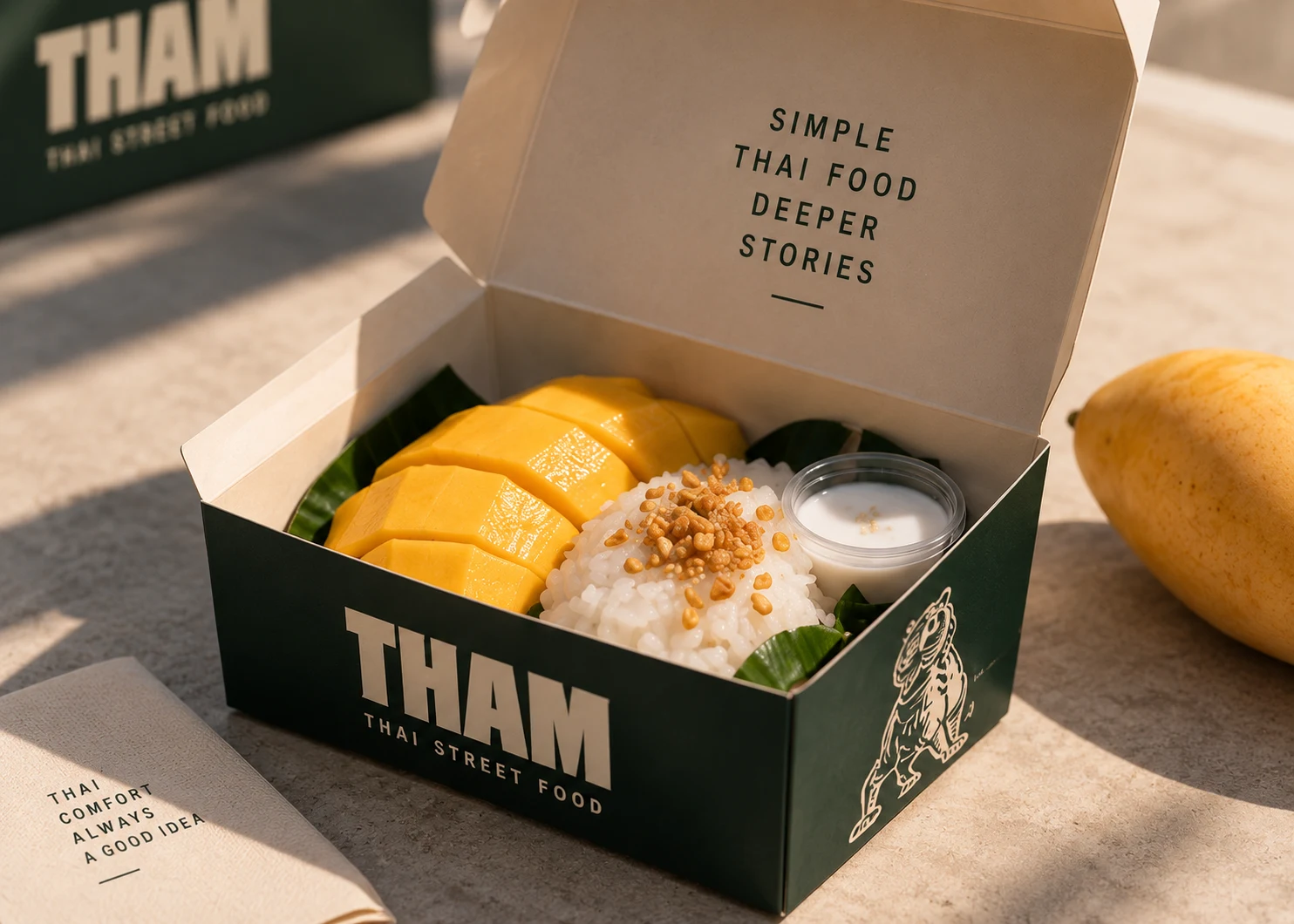
Say it: khow nee-ow ma-moo-ang Approximate English sounds
Mango sticky rice is a lesson in how much a dessert can say with very few ingredients. Ripe fruit brings perfume and juice; coconut-seasoned rice brings warmth, richness and a satisfying chew. A little salt makes both more vivid. Known in Thai as khao niao mamuang, ข้าวเหนียวมะม่วง, it is one of the most approachable introductions to Thai sweets. At THAM, Mango Sticky Rice pairs ripe mango, soft sticky rice and rich coconut. Understanding the choices behind that familiar plate makes the next spoonful more interesting—and makes preparing a version at home much less mysterious.
What is mango sticky rice?
The name describes its two most visible components: khao niao means sticky rice, and mamuang means mango. The rice is usually prepared as khao niao moon, glutinous rice seasoned with sweetened, lightly salted coconut milk. It is a distinct preparation rather than ordinary steamed rice with a sauce poured over it at the table.
Think of the plate as three complementary textures. The fruit should yield easily to a spoon. The rice should hold together while retaining discernible grains. The coconut component adds a coating that connects them. Try a little rice and mango separately before combining them: the difference explains why neither component is simply a garnish. A pleasing spoonful can be adjusted to your own preference by taking more fruit or more rice, without needing to stir the entire plate together.

A history told through living kitchens
It is tempting to give an internationally famous dessert a single birthday. The available sources do not establish one inventor or an uncontested moment when mango first met sweet coconut rice. A more useful history follows the people who continue making it and the wider family of rice-based Thai sweets.
MICHELIN's interview with Bangkok's K. Panich documents a shop founded in 1927 and recipes passed through a family with a connection to palace cooking. The story describes careful coconut preparation and knowledge taught between generations. That is evidence of a particular shop's heritage, not proof that it invented the dessert. For a visitor, the distinction matters: a classic can belong to many kitchens while individual makers preserve their own techniques. THAM's version sits within that broader food culture; it does not claim the lineage of another business.
Choosing the rice: sticky is a variety
The essential shopping decision comes before cooking. Buy rice labelled Thai glutinous rice, sweet rice or sticky rice, and check the grain type required by your recipe. Leela Punyaratabandhu's guidance at SheSimmers points readers towards Thai glutinous rice rather than treating all rice that becomes sticky as interchangeable. Jasmine rice, sushi rice and risotto rice give different results.
This is a useful place to resist an improvised substitution. A bag of rice may look like a minor detail compared with a beautiful mango, but it determines the structure of the entire dessert. When planning a first attempt, buy the correct rice before choosing a date to cook. Keep the packaging until you have made the batch, so a successful result is repeatable. The ingredient photographs here distinguish raw glutinous rice from the jasmine rice used in other THAM dishes.
Taste the fruit and the rice separately. Then discover what happens when they meet.
The mango deserves its own attention
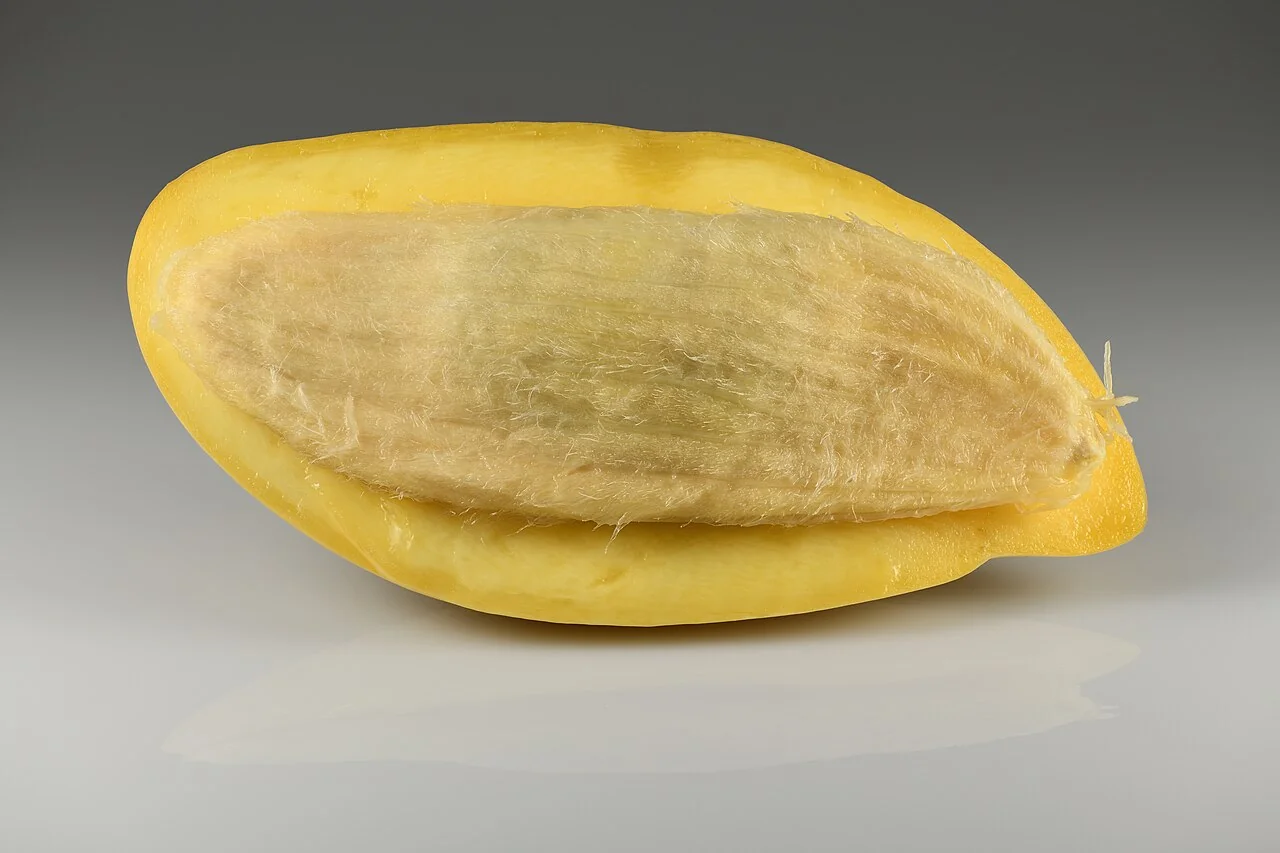
A mango's appearance tells only part of the story. Look for fruit intended to be eaten ripe, with fragrant flesh and a pleasant texture rather than long, intrusive fibres. Nam Dok Mai is a familiar Thai example, pictured in this guide; it is an illustration of a variety, not a promise about which mango THAM serves on any particular day.
Suwanee's mango sticky rice recipe emphasises the relationship between sweet fruit and coconut sauce. Our practical suggestion is to taste the mango before assembling a home version. If it is disappointing on its own, an elaborate presentation will not transform it. Slice away from the flat stone and choose a shape that is easy to lift with a spoon. Broad slices look elegant, but neatly cut pieces are equally comfortable for a shared dessert. Keep fresh fruit separate from any rice that needs warming.
Coconut, sweetness and the small role of salt
Coconut milk used for cooking is different from the thin coconut drinks sold as refreshments. The dessert needs coconut character and enough body to season the rice. Recipes vary in how they divide the coconut between an absorbed dressing and a separate finishing sauce. Some include a thickened topping; others deliberately combine those jobs.
Sugar contributes sweetness, but the finished plate should still let the fruit be recognisable. Salt supplies a gentle savoury edge. This does not mean the dessert should taste like a salted snack: it should make the next bite of mango feel bright and the coconut feel rounded. At home, measure the salt rather than adding an enthusiastic pinch to an unfamiliar recipe. Keep notes on the specific coconut product used; changing brands and changing quantities together makes it difficult to understand a different result.
How mango sticky rice is prepared
The general sequence is to rinse and soak the appropriate rice, steam it until tender, then fold in a prepared coconut mixture and allow time for absorption. Pailin Chongchitnant's detailed cooking guide explains this progression. A tested recipe provides quantities and timings; the important idea for a first-time cook is that steaming and coconut seasoning are separate stages.
Have the coconut mixture ready while the rice finishes so the process is calm rather than improvised. Fold gently to preserve the grains, then give them their resting time. Assemble with freshly cut mango and any finishing sauce just before serving. These are general culinary principles, not a disclosure of THAM's restaurant recipe.
Variations: different colours, toppings and companions
The classic pairing is only one way to serve sweet coconut rice. MICHELIN's K. Panich interview also records rice with custard and savoury-sweet toppings, showing that the rice preparation has a life beyond mango. Those related dishes help explain why the rice is treated as a craft in its own right.
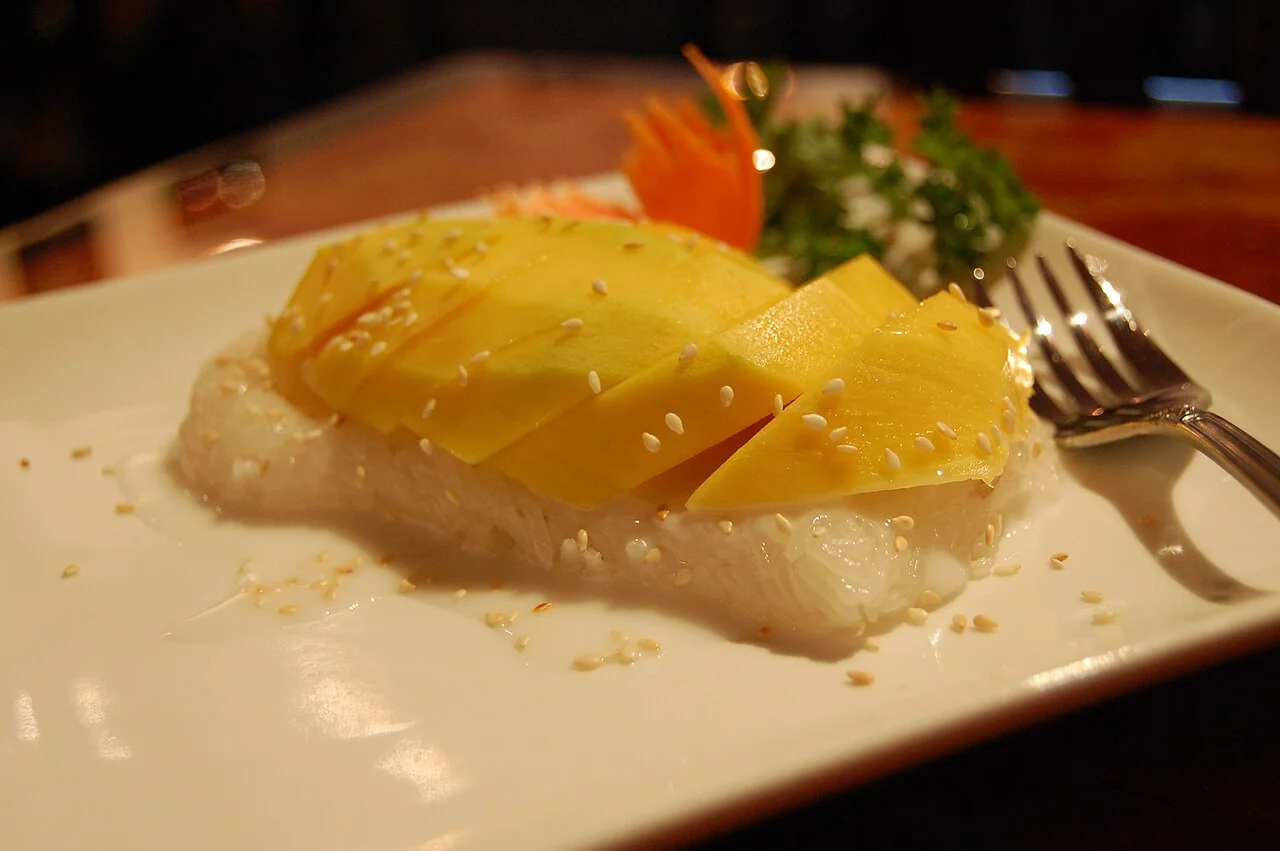
For mango versions, recipes may finish the plate with toasted or fried mung beans or sesame seeds; these provide a contrasting texture. Colourful rice and playful shapes are other presentation possibilities. Leela's separate exploration of mango-and-rice rolls is explicitly a way to change the format rather than improve the underlying flavour. If you experiment at home, change one feature at a time. A different topping is easy to evaluate when the fruit and rice remain familiar. The variations in this guide are not a list of THAM add-ons.
Trying mango sticky rice at THAM
THAM’s Mango Sticky Rice is our best-seller, listed at 120 THB. It brings together ripe mango, sticky rice and coconut as a sweet finish after a bowl, curry or plate of noodles. Visit our mango sticky rice in Bangkok page for the price, flavour notes, opening hours and delivery details. This guide explores the wider dish and a home-kitchen adaptation; ask the team about the preparation served on your visit.
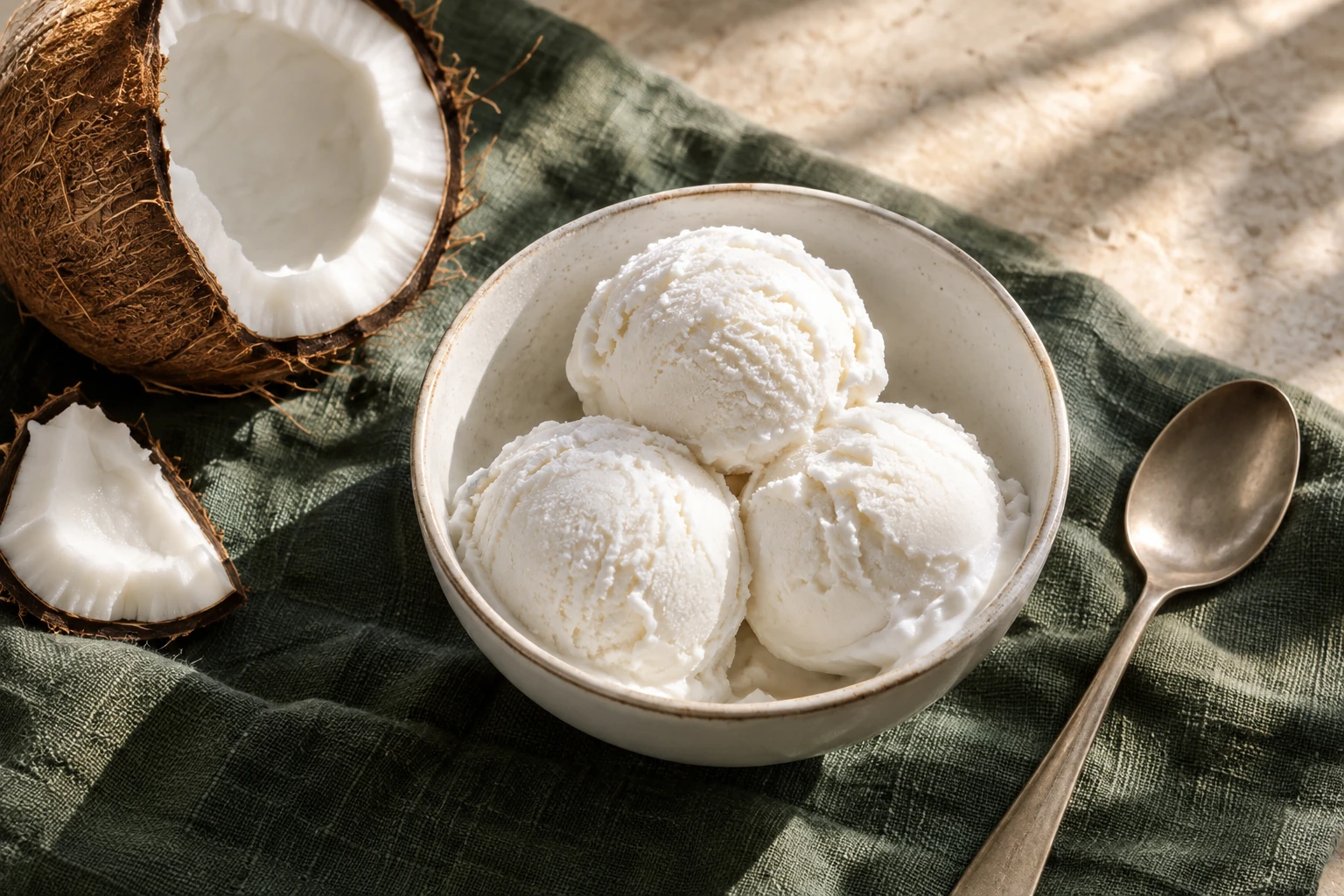
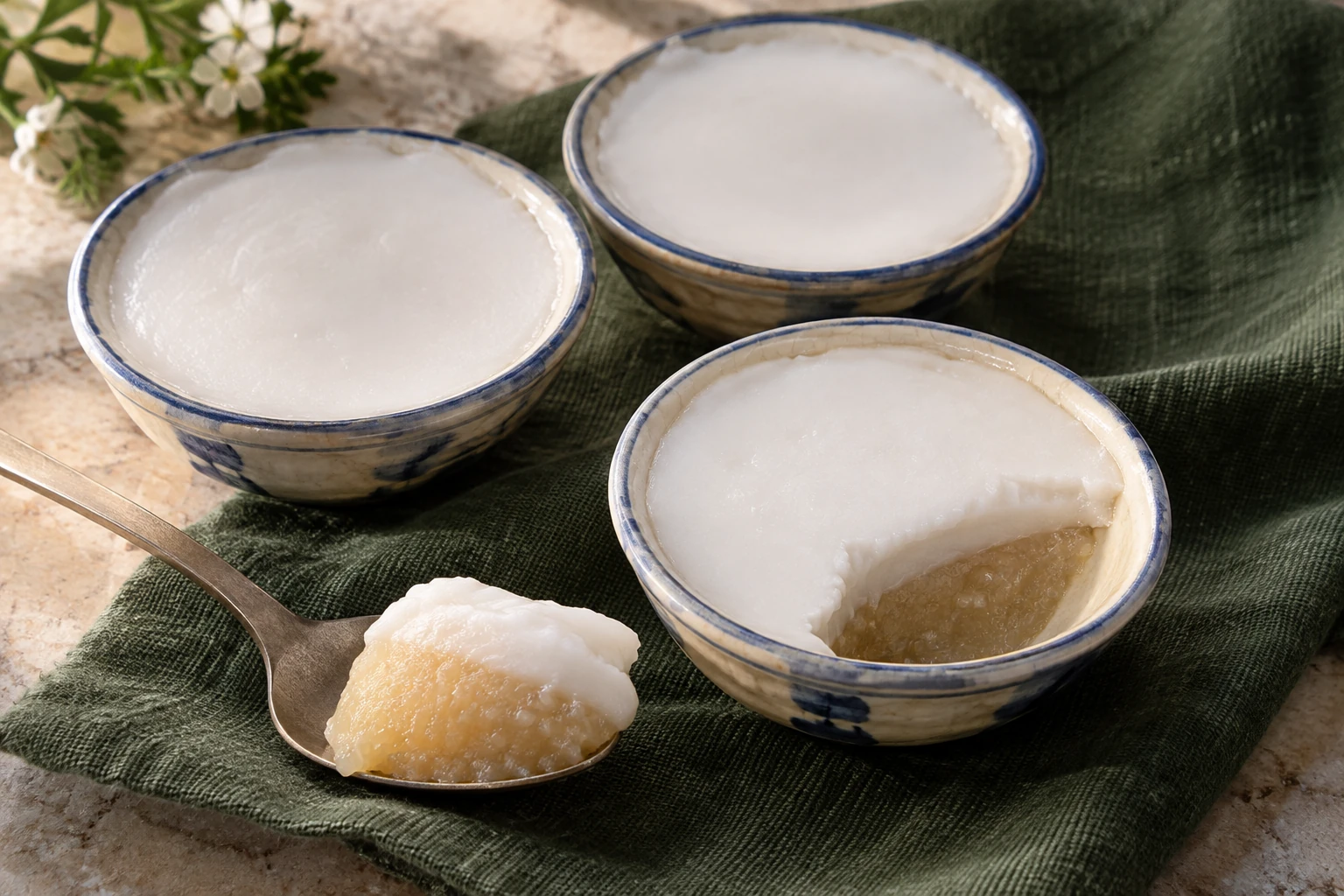
For a first visit, consider it alongside Khanom Tuay if you want to explore how coconut changes character across Thai desserts. The mango plate combines fresh fruit and chewy grains; the little steamed cups give you a soft set texture and a more explicit sweet-salty contrast. Coconut Ice Cream offers another direction entirely. Each starts a different conversation from ingredients that may already feel familiar. A dessert order can be the beginning of learning a cuisine, not simply the last item on the table.

MAKE IT AT HOME
Golden mango, coconut rice.
An original home-kitchen adaptation, not THAM’s restaurant recipe.
Gather
- 200 g Thai glutinous rice
- 300 ml full-fat coconut milk; 60 g sugar
- ½ tsp fine salt, divided; 1 tsp rice flour mixed with 1 tbsp water
- 2 ripe mangoes; toasted split mung beans, optional
Cook
- Rinse the rice, cover generously with water and soak for at least four hours. Drain. Put it in a clean cloth-lined steamer over simmering water, without submerging the rice.
- Steam for approximately 20–30 minutes, checking the water beneath the steamer. Taste a grain: it should be tender throughout with no hard centre. Time varies with the rice and steamer.
- Warm 160 ml coconut milk with the sugar and ¼ tsp salt. Fold gently into the hot cooked rice. Cover and allow about twenty minutes for the liquid to absorb.
- For the topping, warm the remaining coconut milk and salt. Stir in the rice-flour slurry and heat, stirring, until lightly thickened. Slice the mango just before serving.
- Plate small portions of rice beside the mango. Spoon over a little coconut topping, adding toasted mung beans if you wish. Serve promptly.
This home adaptation has not been kitchen-tested. For leftovers, cool rice rapidly, ideally within one hour, refrigerate and use within 24 hours. Reheat only once until steaming throughout. Do not leave rice out while waiting for later servings.
KEEP YOUR CURIOSITY HUNGRY
Follow coconut into a second dessert: discover the delicate layers of Khanom Tuay.
Explore the THAM menuRead further
- MICHELIN Guide — Inside Bangkok’s K. Panich family kitchen
- Leela Punyaratabandhu — Thai coconut sticky rice and mango
- Leela Punyaratabandhu — Mango sticky rice in a different format
- Suwanee — Mango sticky rice ingredients and preparation
- Pailin Chongchitnant — Mango sticky rice method
- UK Food Standards Agency — Safe rice handling
Photography & credits
Editorial photographs illustrate Thai food and culture. THAM lifestyle images are creative brand imagery, including AI-generated scenes; they do not document the restaurant, its location or exact servings.
- Mango sticky rice, the THAM lifestyle collection — THAM — supplied creative brand imagery.
- Glutinous rice and coconut — THAM — AI-generated food illustration.
- Mango fruit Nam Dok Mai - cross section.jpg — Ivar Leidus. CC BY-SA 4.0. Resized and compressed for the web.
- Khaoniao mamuang - 2008-06-22 -001.jpg — stu_spivack. CC BY-SA 2.0. Resized and compressed for the web.
- Sweet moments, the THAM lifestyle collection — THAM — supplied creative brand imagery.