Sit down for Thai food in Bangkok and the most useful thing on the table may be the simplest: a spoon beside a fork. If you expected chopsticks with every dish, that pairing can be a surprise. It makes sense once you start eating rice, sauce and small pieces of food together. This guide explains the everyday tools, the pleasures of sharing and a few practical ways to feel comfortable at dinner. Try the ideas with familiar dishes at THAM on Yen Akat Road, then carry your curiosity to other Bangkok tables.
Why the spoon and fork work together
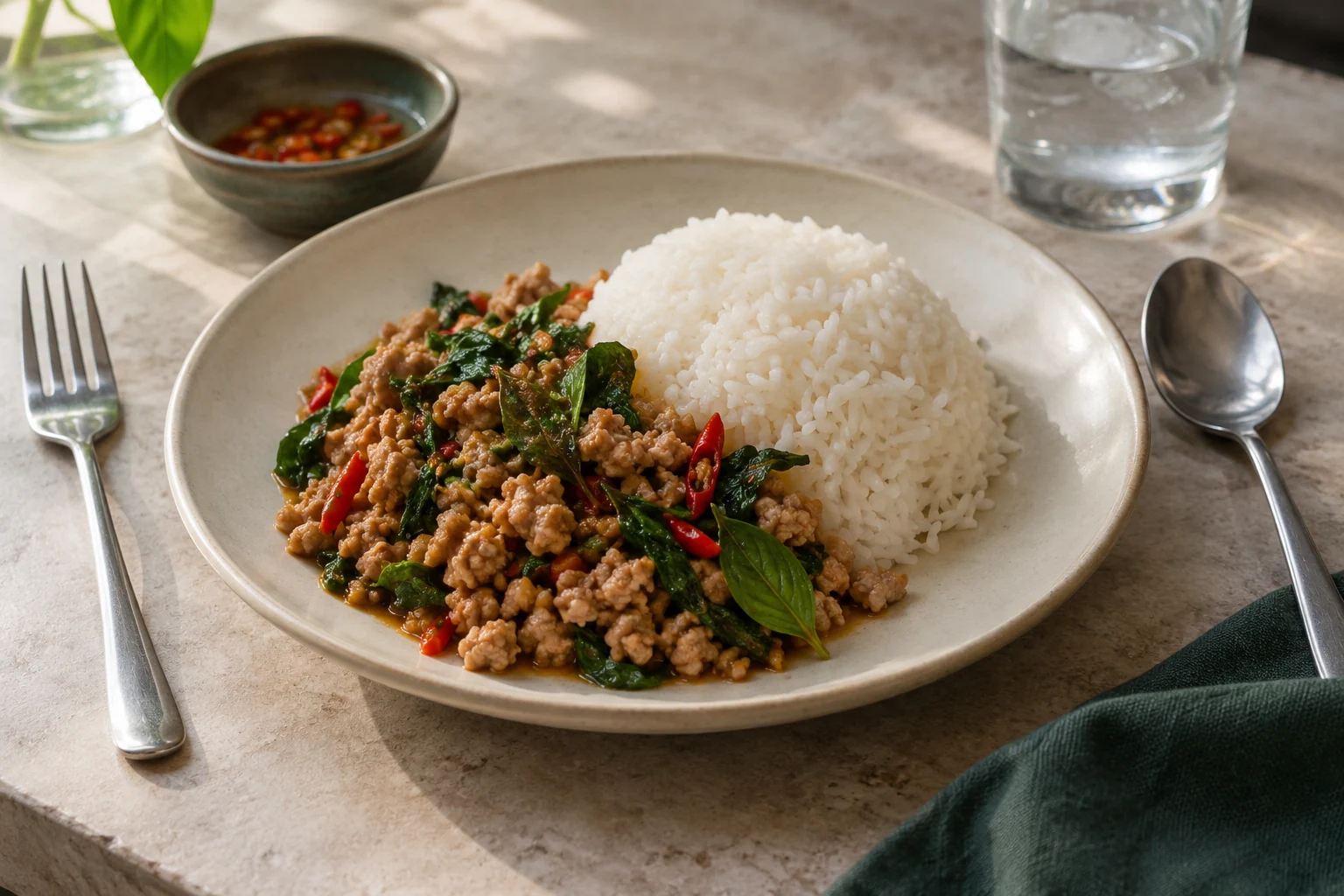
A spoon and fork are common companions for Thai rice dishes. Hold the spoon in your dominant hand and use the fork to guide a manageable amount of food onto it. The spoon carries the mouthful; the fork helps gather grains and steady ingredients. Pailin Chongchitnant demonstrates this clearly in her guide to eating Thai food. Think of the two utensils as a small team rather than trying to make a fork do every job.
Start with less than you think you need. A little rice and a small piece of the accompanying dish are easier to lift than a spoon piled high. Keep your movements close to the plate and give yourself time to get comfortable. Left-handed diners can simply reverse the arrangement. There is no need to turn an enjoyable meal into a performance: the point is to handle the food easily and notice what you are eating.
Practise with a rice plate at THAM
Pork Pad Kra Pao gives you an easy place to begin. Put a little rice beside some of the basil pork, then use the fork to bring them onto the spoon. On the next bite, change the proportion. More rice softens the intensity of the seasoning; more pork brings the stir-fry forward. Our Pad Kra Pao guide explains the herb and the dish in more detail, so the unfamiliar name becomes something you can recognise by aroma and texture.
Chicken Khao Pad offers another useful exercise because the rice and other ingredients arrive mixed together. Gather a modest spoonful from the edge of the serving instead of chasing individual grains across the plate. With either dish, begin by tasting what arrives. THAM's current menu says dishes are non-spicy by default, with chilli available on request. Tell the team what you prefer before ordering; there is no reward for asking for more heat than you enjoy.
Chopsticks have a place, especially with noodle soup
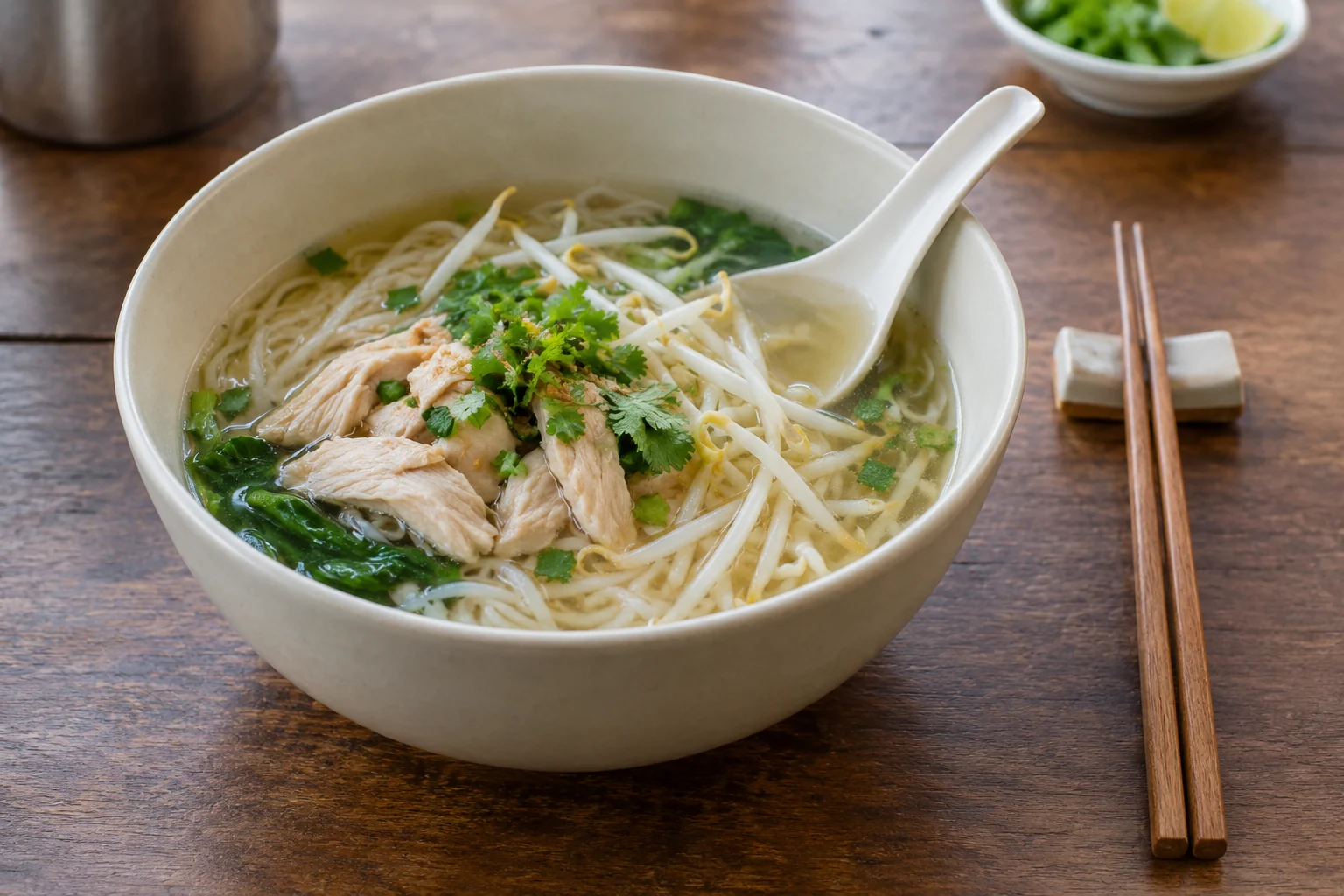
Thai dining is not governed by a single set of utensils. Chopsticks and a soup spoon are a familiar combination for noodle soups: the chopsticks lift the strands while the spoon carries broth. A fork and spoon remain a practical choice for stir-fried noodles, including Pad Thai. The noodle-soup image here illustrates that broader dining custom; it is not an additional dish on THAM's menu. Check the current THAM menu when choosing what to order.
If long noodles feel awkward, take a smaller portion and let the remaining strands settle back before lifting your bite. Keep the bowl close enough to avoid stretching across the table. For Pad Thai, you can gather a little noodle with egg or tofu rather than trying to lift the whole serving at once. Choose utensils you can use comfortably, and ask for help when needed. Learning one useful movement is more enjoyable than worrying about every possible rule.
The right utensil is the one that helps you enjoy the next bite.
Share a dish while keeping your own plate
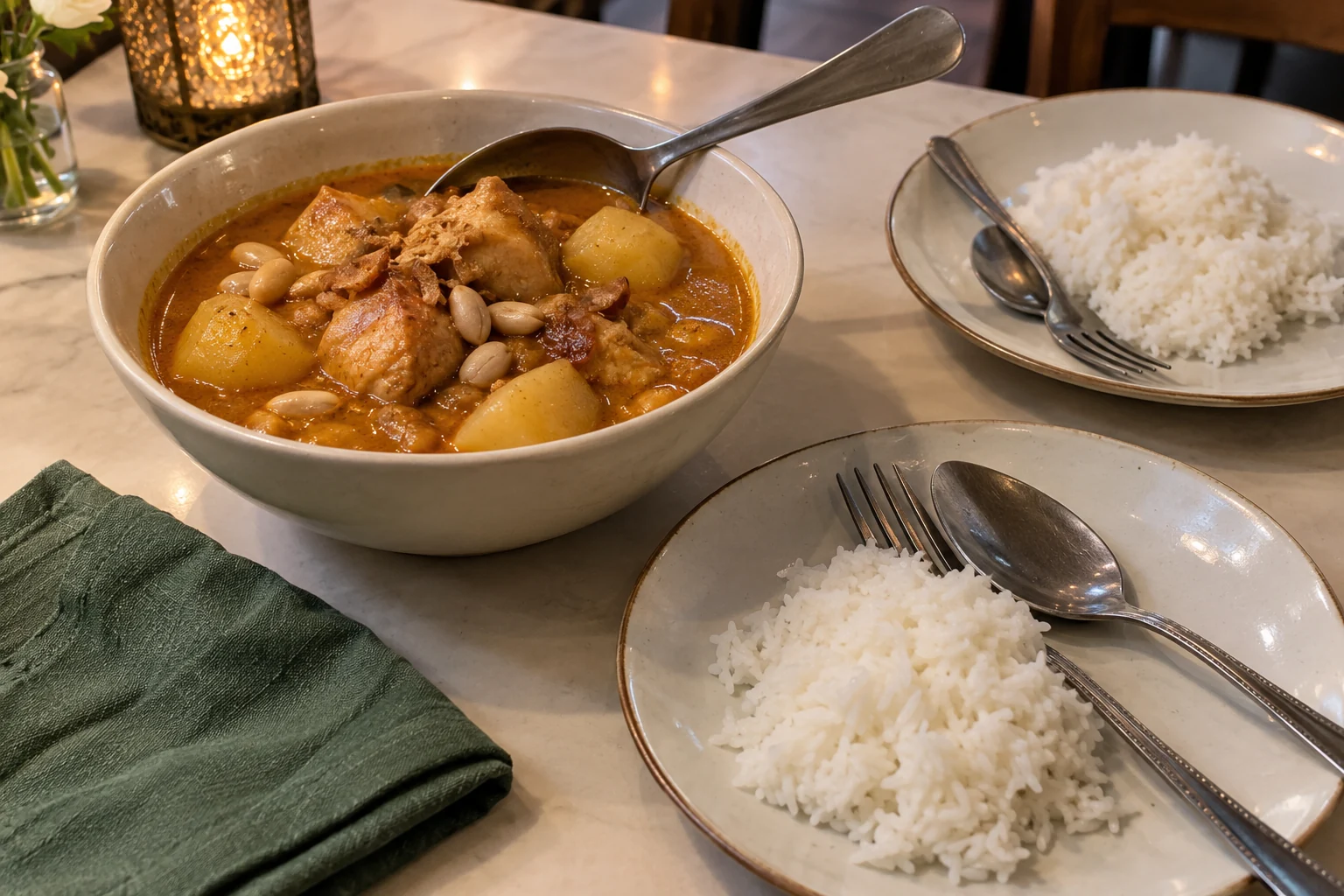
Sharing is an important part of many Thai meals, although a quick individual plate is equally at home in Bangkok. The Tourism Authority of Thailand's discussion of food sharing describes dishes placed in the centre and small portions taken alongside rice. You do not need a large group to explore this. Two diners can agree to share one dish while keeping their own rice or main plates, depending on appetite.
Make that agreement before serving yourself. Use the serving utensil provided, or ask for one, and move a small helping to your own plate. Leave the serving spoon with its dish so your companion can reach it. Ask before taking the last piece. These simple choices keep the meal relaxed and make it easier to see how much everyone wants. Sharing should create room for conversation, not pressure someone to eat ingredients they do not want.
Give curry and soup their own space
When trying a curry with rice, begin with a little sauce beside a portion of rice. You can add more after tasting. Keeping some rice plain lets you compare a rich mouthful with a gentler one and avoids committing your whole plate to a single balance. With Chicken Massaman, for example, a potato piece, some sauce and rice make a different mouthful from chicken and sauce alone. You decide which combination you want next.
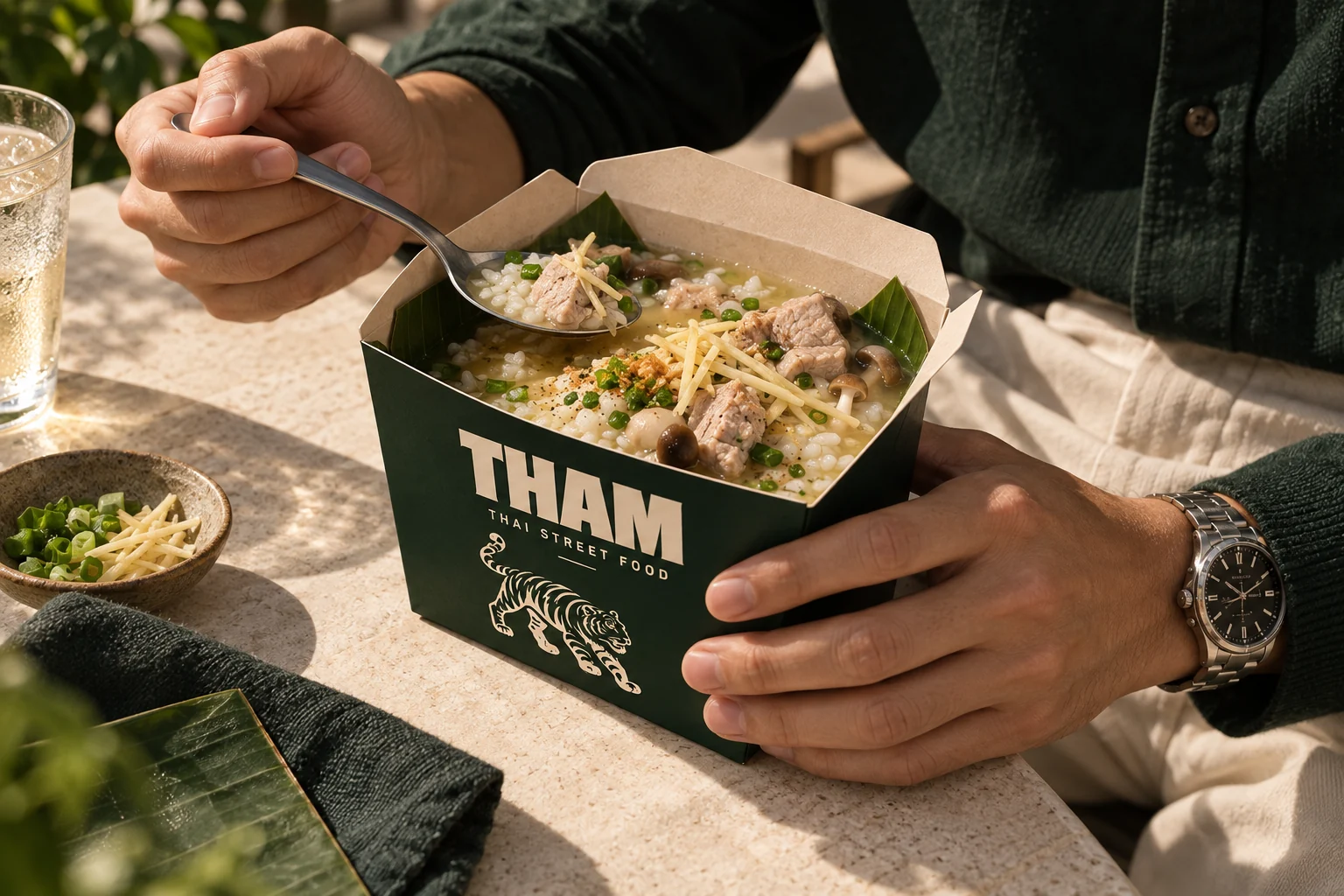
Soup invites a different pace. Take a modest spoonful, check that it is comfortable to eat and enjoy the broth before gathering more solids. THAM's Khao Tom Signature combines rice and pork in broth, so the spoon does most of the work. If an unfamiliar ingredient seems tough or difficult to eat, ask the team what it is. You do not have to identify every leaf or root from its appearance, and a short question can teach you more than guessing.
Taste before reaching for condiments
Treat seasoning as a choice rather than an automatic first step. Taste a bite, decide what you would like to change and adjust only your own portion. If chilli is being shared, a small amount on the side lets different diners make different decisions. Ask what a condiment contains if its ingredients matter to you. Its colour alone will not tell you its flavour, heat or suitability for your dietary needs.
You can continue that small-portion approach at home. Our partner Siam Crisp's guide to using Thai crispy chili offers ideas for adding crunch to everyday dishes. It is a separate resource for exploring condiments, not a claim that THAM serves those products. Compare one plain bite with one lightly seasoned bite and stop when you like the result. Learning your own preference is more useful than following someone else's tolerance for heat.

Finish with a different kind of rice
Sticky rice does not always call for the same approach. Plain sticky rice served with savoury food is often eaten by hand in northern and northeastern Thai dining. Coconut sticky rice with mango is a different experience: a spoon makes it easy to bring the soft fruit, rice and sauce together. These are examples of how utensils respond to the dish, rather than a reason to treat every food containing rice in exactly the same way.
For dessert, try a little mango on its own, then a little coconut rice, then a combined spoonful. You will notice the contrast more clearly than if you mix the entire plate immediately. Share if you wish, or keep separate portions if that suits your group. THAM's mango sticky rice page explains the dessert and current ordering details. Leave yourself enough appetite to enjoy it without feeling obliged to finish a meal in a particular way.
Bring these ideas to Yen Akat Road
For a THAM visit, focus on a few practical choices: choose a dish you want, make your spice preference clear and mention dietary requirements before the order is prepared. Read the dish description and ask whether rice is included if you are unsure. You can order one main and enjoy it slowly; a shared meal is an option, not a requirement. The useful part of dining etiquette is helping everyone feel at ease around the food.
THAM is at 15/1 Yen Akat Road, Chong Nonsi, Yan Nawa, Bangkok. The listed opening hours are Monday to Saturday, 8:00 PM to 1:00 AM the following morning, with Sunday closed. Check Visit Us for current practical details before setting out. At the table, begin with one comfortable spoonful. Notice the rice, the sauce and the aroma, then decide what you would like next. Confidence grows naturally when dinner becomes a chance to taste and ask questions.
KEEP YOUR CURIOSITY HUNGRY
Bring your curiosity to THAM on Yen Akat Road. Choose a dish, ask a question and enjoy it one spoonful at a time.
Explore the THAM menuRead further
Photography & credits
Food illustrations show general serving examples, not exact THAM portions or the restaurant interior.
- Thai basil pork and jasmine rice with a spoon and fork on a cream table — THAM.
- Massaman curry with a shared serving spoon beside two individual rice plates — THAM.
- A generic Thai noodle soup with chopsticks and a soup spoon — THAM.
- Mango and coconut sticky rice with a dessert spoon — THAM.