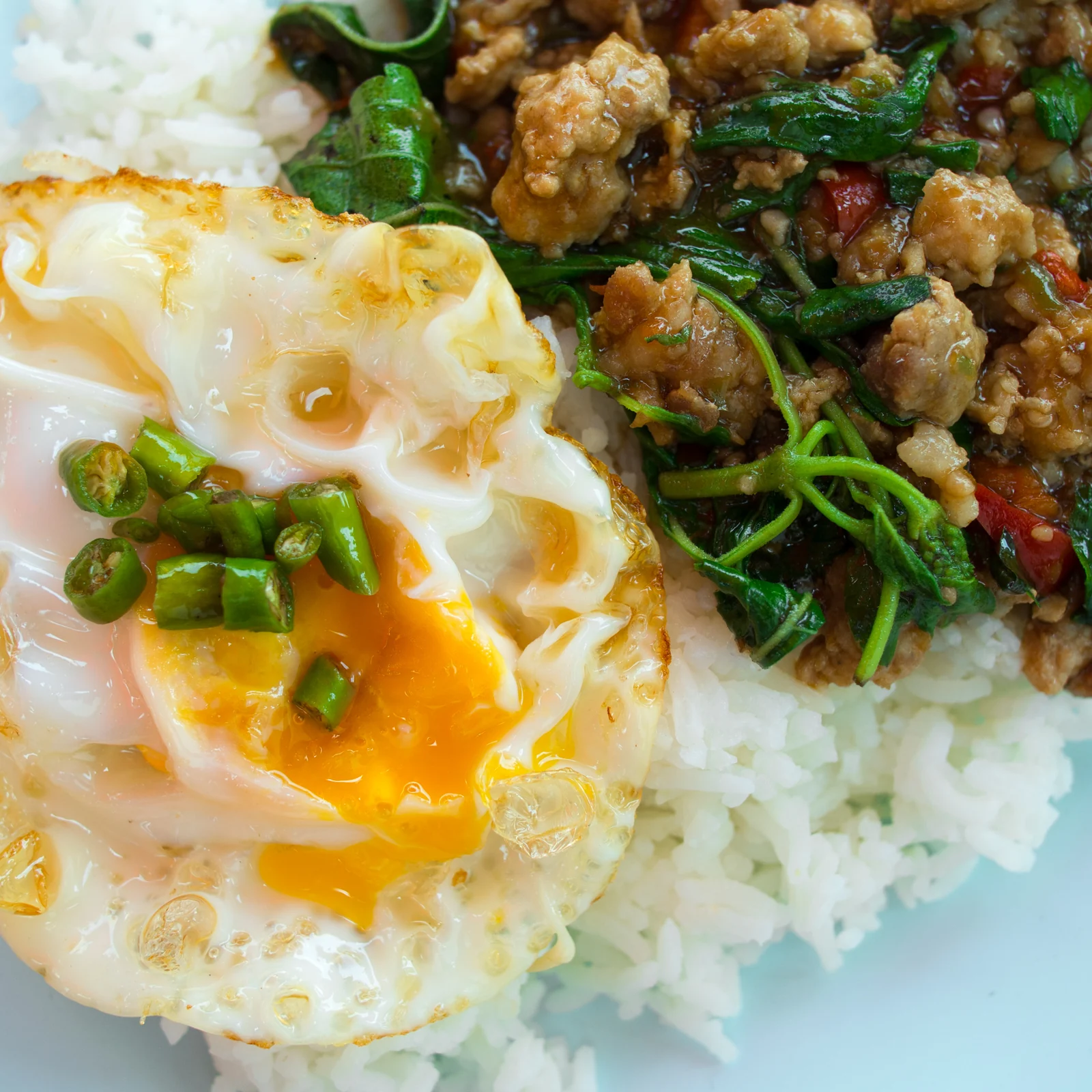
Say it: pat ga-prao moo Approximate English sounds
Pad Kra Pao Moo is a compelling argument for paying attention to an everyday plate of rice. Minced pork carries a savoury sauce, garlic gives it a direct aromatic foundation, and holy basil changes the entire impression as the leaves meet the hot meat. The dish can arrive without elaborate presentation and still demand your full attention. For visitors to Thailand, learning what the name means is a useful first step: the defining ingredient is a particular basil, the pork is specified, and an egg is a choice rather than an invisible part of the order.
Reading Pad Kra Pao Moo on a menu
The Thai name ผัดกะเพราหมู brings together stir-frying, holy basil and pork. “Moo” means pork, despite the association an English speaker might make with the sound. Pad Kra Pao is a familiar menu spelling; pad gaprao and phat kaphrao are other attempts to represent the Thai name in Roman letters. They do not automatically indicate different dishes.
For a practical pronunciation guide, try “pat ga-prao moo”. The guide is approximate and cannot convey every tonal detail. More useful than getting anxious about spelling is confirming the actual order: pork rather than chicken, the desired chilli level and whether an egg is included. If a menu says only “basil stir-fry”, the herb and protein may need clarification. A short question can explain more than assuming that every English use of “Thai basil” refers to precisely the same plant.

Holy basil is the defining flavour
Holy basil, kaphrao, is distinct from Thai sweet basil, horapha. Praew, the Thai cook behind Hungry in Thailand, describes holy basil's peppery character in contrast with sweet basil's more anise-like aroma. This is why choosing the herb matters even when garlic, pork and sauce remain unchanged. Basil is not simply a green decoration added to an otherwise finished meat dish.
For the diner, look for the way the herb follows the savoury first impression of the pork. Try a small bite with a leaf and compare it with meat alone. You do not need a specialist vocabulary to recognise that the aroma has changed. Outside Thailand, substitutions may be necessary, but a different basil produces a different result. That does not prevent it being enjoyable; it does explain why a remembered holiday plate may be difficult to reproduce with whichever basil happens to be available.
An everyday classic with a less certain timeline
The primary cooking accounts consulted present pad kra pao as familiar everyday food, while documenting markedly different preferences. They do not establish a single inventor or an exact birth year for the pork version. It is therefore better to leave that timeline open than attach a confident origin story to a dish that has travelled through many kitchens.
Its contemporary importance is easier to see. Pailin Chongchitnant argues for holy-basil stir-fry as an especially representative Thai dish, while working with beef in one version and chicken in another. Praew documents a pork preparation she served in her own restaurant. Those are specific cooks' accounts, not a national rulebook. Read together, they show how a recognisable idea can remain stable while meat, seasoning and personal preference vary. The dish's ordinary usefulness is part of its appeal: it does not need an invented royal connection to merit attention.
Basil is not simply a green decoration added to an otherwise finished meat dish.
Pork, garlic and sauce each have a role
Minced pork gives pad kra pao moo a texture that works particularly well with rice. Small pieces can share a spoonful with grains and basil, distributing seasoning across the mouthful. A plate made with sliced meat would feel different even if the sauce were identical. The size and separation of the mince matter as much as its appearance in a menu description.
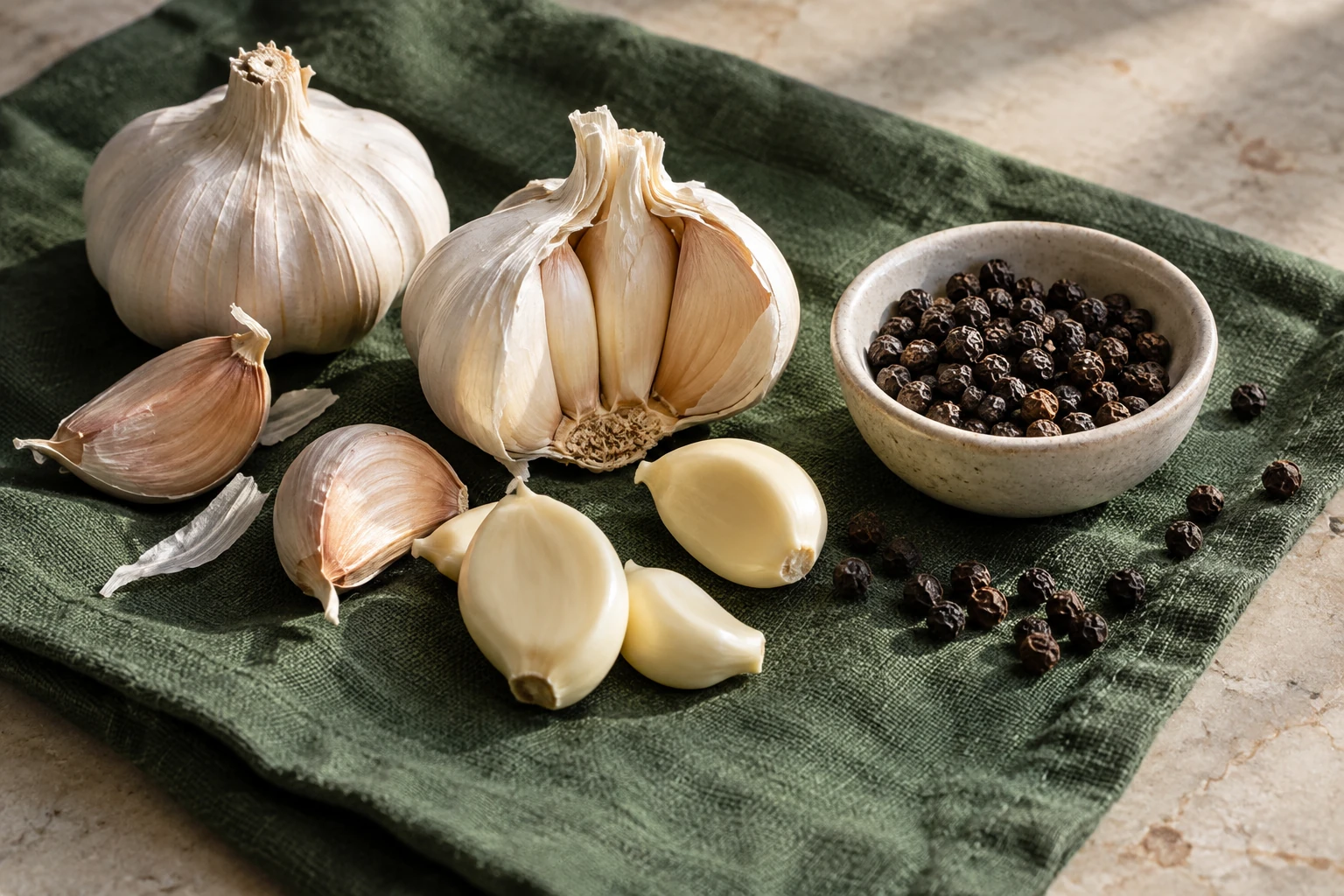
Garlic builds the aromatic base; the sauce provides saltiness and savoury depth. Oyster sauce appears in THAM's ingredient list and in several published preparations, but individual cooks combine seasonings differently. W. Tipsuwan's pork version uses more than one sauce, while other approaches are simpler. A darker finish does not prove a dish is richer, spicier or more traditional. When comparing bowls or plates, taste what the sauce actually does with the rice rather than using colour as a shortcut for flavour.
What happens during the stir-fry
The general method depends on having the ingredients ready before the pan is busy. Garlic, and chilli where used, form the opening aromatic stage. The pork is added and separated as it cooks, seasonings are incorporated, and the basil is introduced near the end. This is an explanation of the dish's structure, not a record of THAM's kitchen recipe or a timed home-cooking formula.
Praew's method wilts the basil after turning off the heat. W. Tipsuwan also treats the leaves as a late addition. Both illustrate why the herb should not spend the entire cooking process simmering with the meat. At home, prepare the rice before beginning the fast final cooking. If all your attention is on rescuing a forgotten pot of rice, you lose the opportunity to follow how the pork, sauce and leaves come together. Organisation matters more than theatrical flames.
Chilli heat and basil aroma are separate choices
Pad kra pao is often cooked with chilli, but the warmth associated with holy basil should not be confused with the amount of chilli added. A non-spicy preparation can still be recognisably aromatic. Conversely, a fiercely hot plate is not automatically more informative about the herb. If chilli overwhelms your palate, you may notice less of the very ingredient that names the dish.
Make your preference clear before the food reaches the pan. Asking for chilli on the side, where possible, allows you to explore the plate in stages. Start with pork, basil and rice, then decide whether an additional accent improves your meal. Chilli preferences are individual, and there is no advantage in ordering someone else's tolerance. At THAM the starting point is straightforward: all dishes are non-spicy by default, and chilli is available on request.

Rice and the optional egg
Rice is the quiet working partner on the plate. It lets you vary the concentration of sauce and pork in each mouthful. You can keep part of the rice relatively plain and bring in the stir-fry a little at a time, rather than mixing everything immediately. That approach makes it easier to notice the difference between the seasoned meat and its accompaniment.
A fried egg is a familiar addition in the published pork preparations, but “moo” does not mean egg and the dish name does not guarantee one. Egg adds another texture and makes the plate more substantial. Ask how it is cooked if the degree of doneness matters to you. Extra pork and extra rice are separate decisions too: one increases the main topping, while the other increases the accompaniment. Ordering both may suit a larger appetite, but an egg is not a compulsory badge of authenticity.
Variants without losing sight of your order
Chicken, beef and seafood versions broaden the holy-basil stir-fry family. Even among pork dishes, minced meat and crispy pork belly should not be treated as interchangeable textures. The Eatdincooking demonstration uses dried chillies and tender basil flowers in its pork version, illustrating another cook's particular aromatic choices. It does not establish that flowers or dried chilli belong in every serving.
Vegetables and sauce combinations also vary. The useful response is curiosity rather than an automatic verdict that an unfamiliar plate is wrong. At the same time, precise names matter: a tofu version still requires checking the sauces before calling it vegetarian. Oyster sauce does not cease to matter because the visible meat has changed. If a dietary restriction guides your order, explain the restriction itself so the kitchen can address the complete preparation, rather than relying on a protein substitution alone.
Pad Kra Pao Moo at THAM
THAM serves Pork Pad Kra Pao for 150 THB, with rice included. The confirmed ingredients are minced pork, holy basil, garlic and oyster sauce. It follows THAM's non-spicy default, with chilli on request. An extra pork portion is 39 THB and is measured as 100 g before cooking; an egg is 15 THB, and an additional 150 g of cooked rice is 15 THB.
That menu gives you a clear starting point for choosing your meal. Keep the standard plate to explore the relationship between herb, pork and rice, or add according to appetite. The additional pork weight is a raw preparation measurement, so it should not be interpreted as the weight of cooked meat on the plate. However you order, let the holy basil be part of the first mouthful: it is the ingredient that makes this familiar combination worth learning by name.
KEEP YOUR CURIOSITY HUNGRY
Try THAM’s Pork Pad Kra Pao with rice included, adding an egg, extra pork or more rice according to appetite.
Explore the THAM menuRead further
Photography & credits
Editorial photographs illustrate Thai food and culture. THAM lifestyle images are creative brand imagery, including AI-generated scenes; they do not document the restaurant, its location or exact servings.
- Basil-fried pork with rice and fried egg — Takeaway. CC BY-SA 3.0. Resized and compressed for the web.
- Holy basil leaves — Snjsharma. CC BY-SA 4.0. Resized and compressed for the web.
- Garlic and black pepper — THAM — AI-generated food illustration.
- Pad kra pao moo — Ryan Snyder. CC BY 2.0. Resized and compressed for the web.
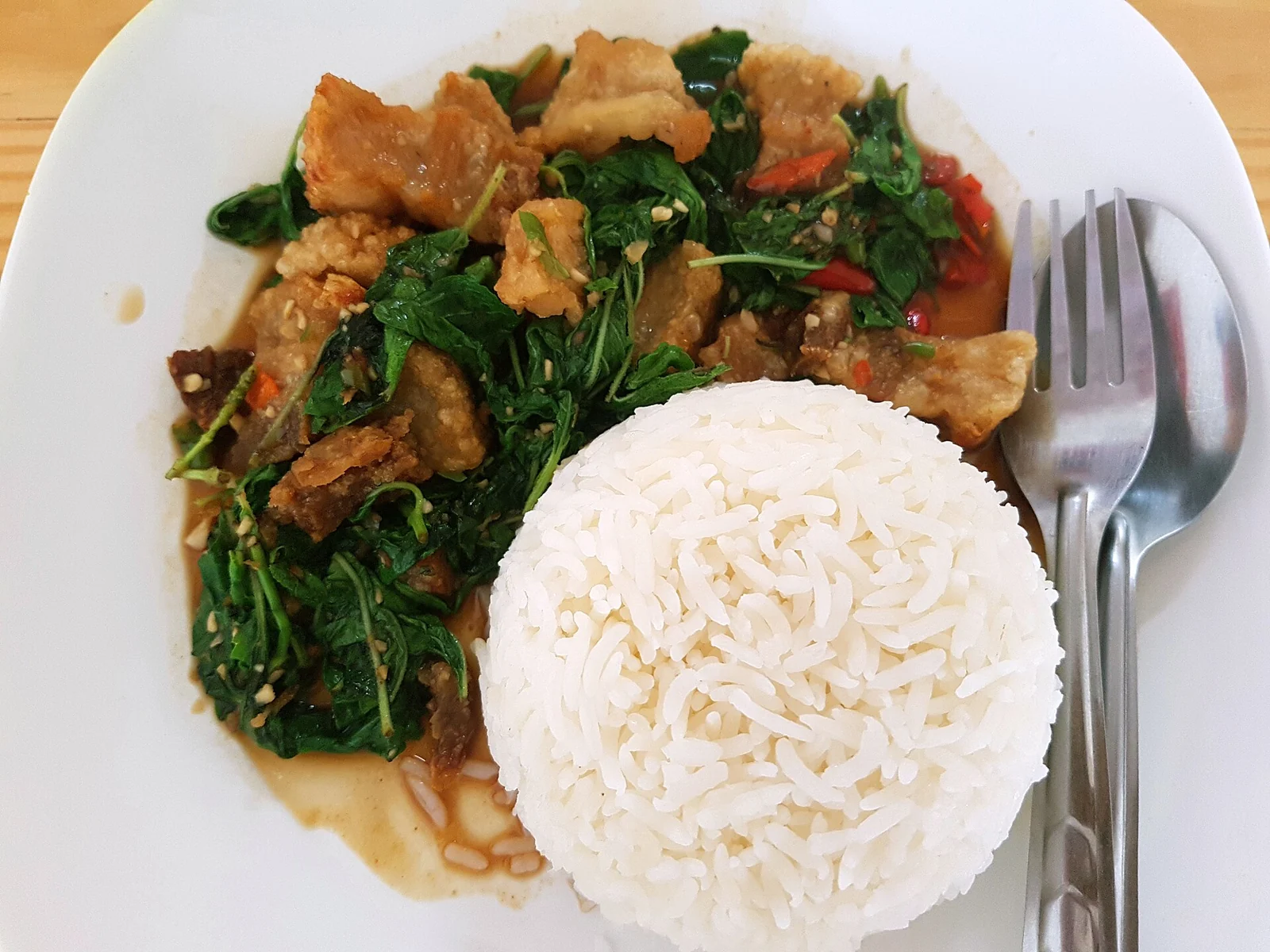
- Basil-fried crispy pork with rice — Iudexvivorum. CC0. Resized and compressed for the web.