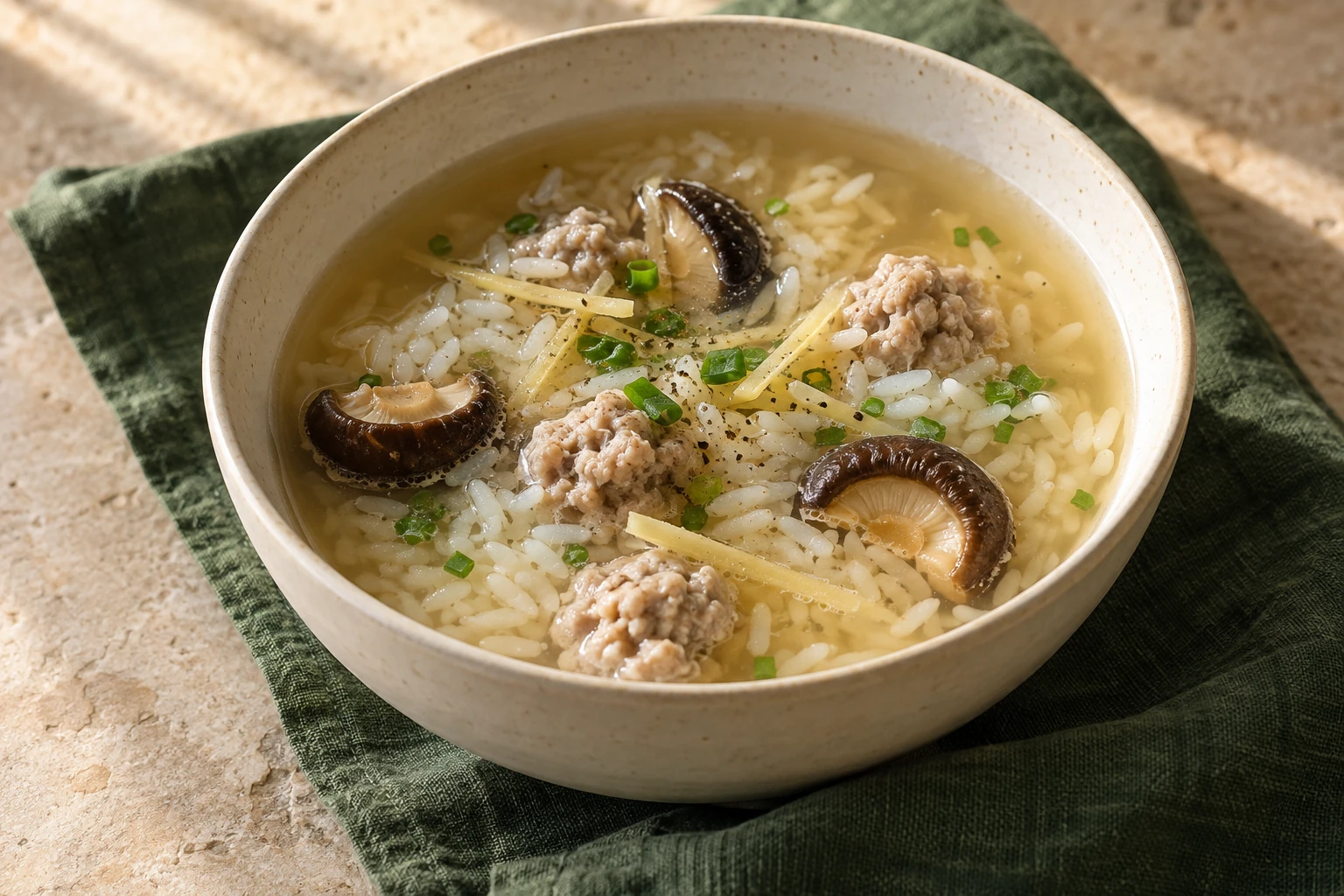
Say it: khow tom moo sap Approximate English sounds
A spoonful of khao tom gives you two pleasures at once: warm broth and rice that still feels like rice. With minced pork, mushrooms and ginger, the bowl is savoury and fragrant without needing a dramatic sauce. It is an especially useful dish to understand when exploring Thai food because its quiet appearance can hide important differences. Khao tom is not simply another name for jok, and pork rice soup need not follow one fixed recipe. Knowing what goes into the bowl helps you order the texture and flavour you actually want.
What is Khao Tom Pork?
Khao tom means rice soup; adding moo specifies pork. The fuller name khao tom moo sap, ข้าวต้มหมูสับ, identifies minced pork. On English menus, the shorter Khao Tom Pork is often easier to recognise. Say it approximately as “khow tom moo”, with “khow” sounding roughly like “cow”. This is a practical sound guide rather than a complete account of Thai tones.
Think of the dish as a relationship between grain and liquid. Rice provides substance, pork brings a savoury centre, and broth connects the ingredients without burying them. A good way to explore the bowl is to taste a little broth first, followed by a spoonful containing rice and pork. You will notice how much the grains soften the impression of the seasoning. Neither spoonful tells the whole story alone.
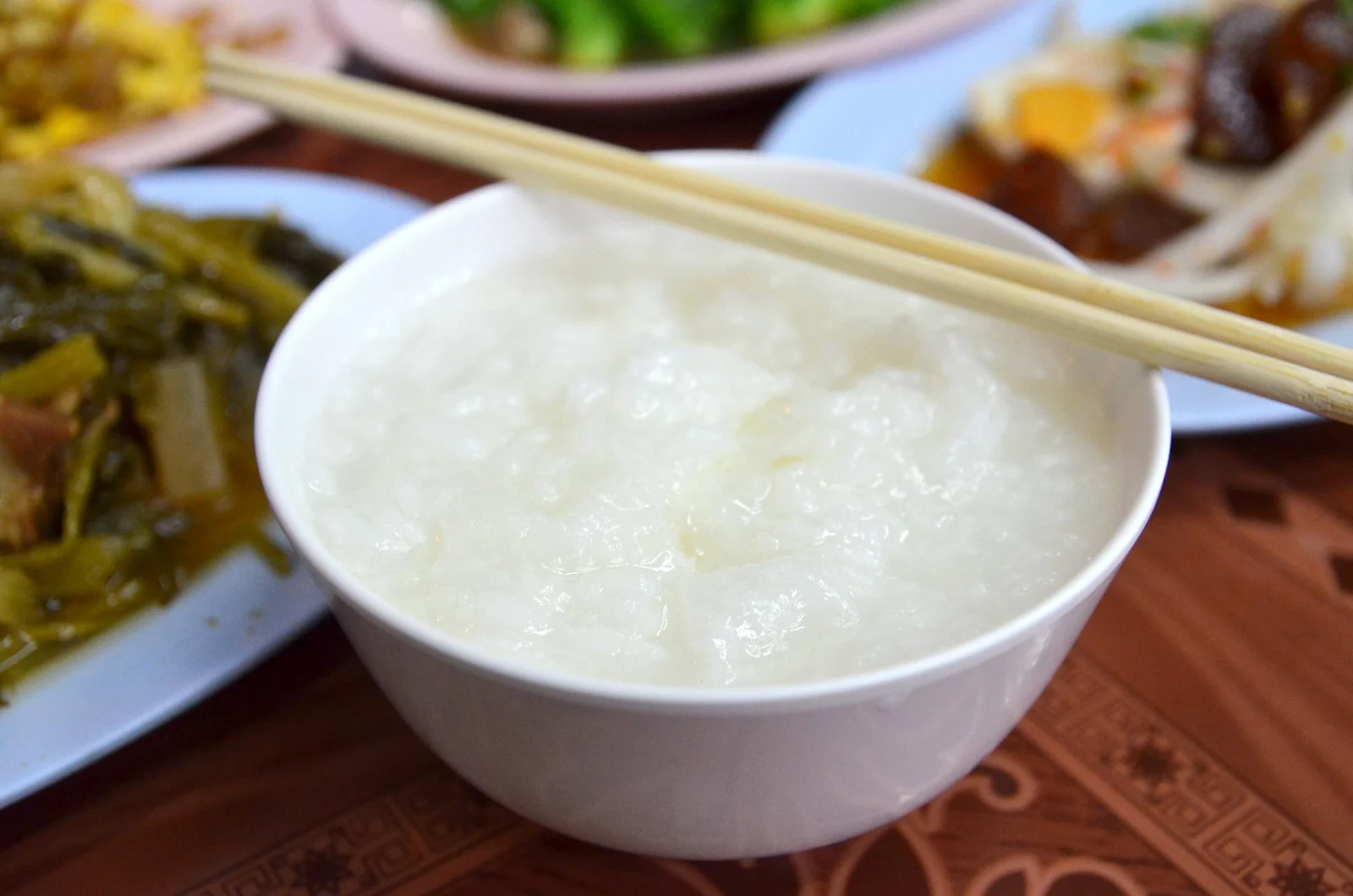
Khao tom and jok are different textures
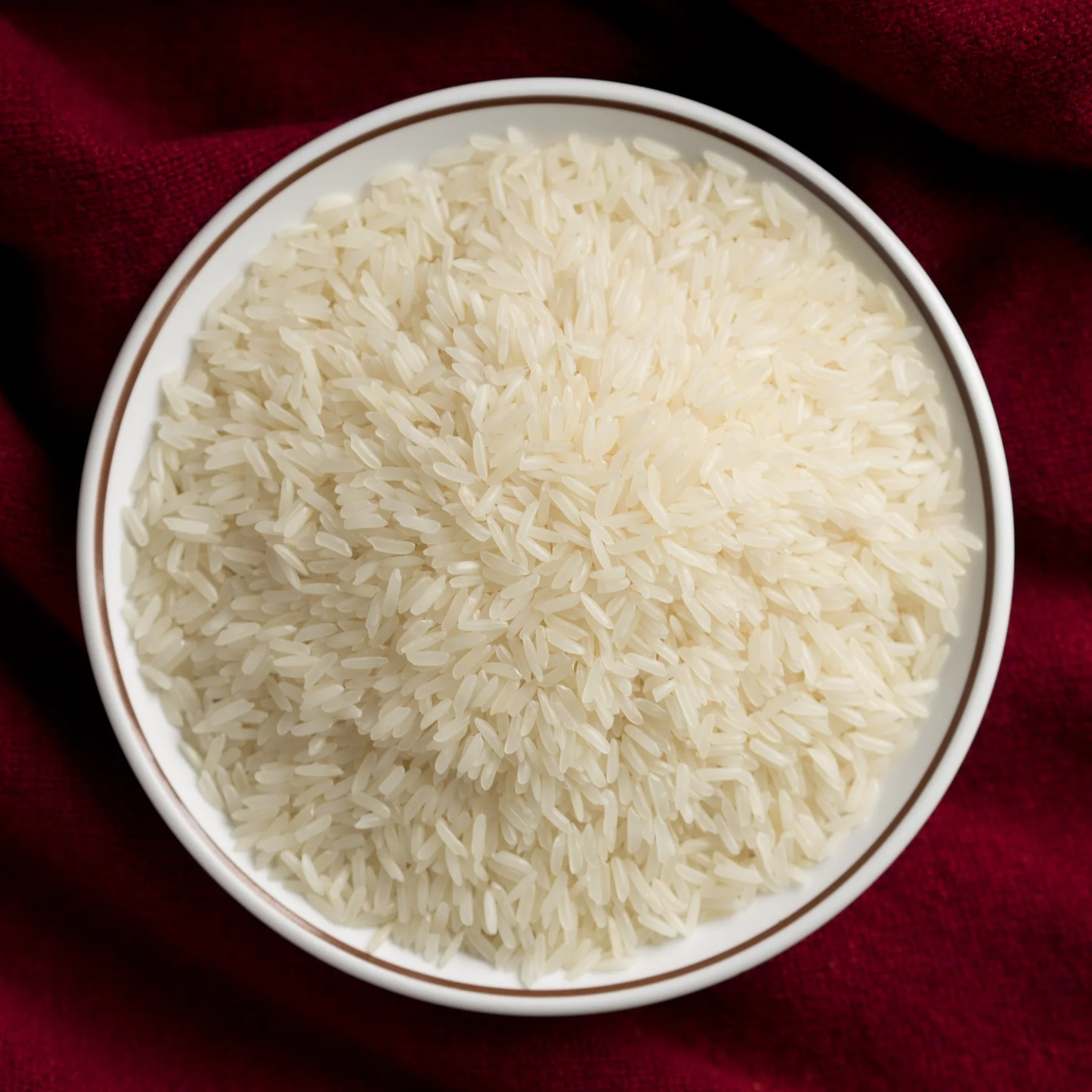
Jok, โจ๊ก, is the thicker rice porridge often translated as congee. Its grains have broken down into a much more continuous, spoon-coating texture. In khao tom, individual grains remain recognisable in the soup. Both can contain pork, ginger and an egg, so a photograph of the toppings may tell you less than a look at the rice beneath them.
Pailin Chongchitnant's teaching on congee places Thai jok within the wider Chinese-origin congee tradition, while showing how Thai cooks use jasmine rice and pork. That connection is useful historical context, not proof of a single inventor or arrival date. For a visitor, the immediate distinction remains practical: choose khao tom when you want broth between your spoonfuls of rice; choose jok when you want a more integrated porridge. Neither consistency is a superior version of the other.
An everyday dish without a tidy origin story
Rice soup belongs to domestic cooking as much as to restaurant menus. The contemporary recipes consulted for this guide document different household and professional approaches, rather than an agreed historical starting point. Praew's family version begins with uncooked rice; W. Tipsuwan's version begins with rice cooked beforehand. Their coexistence is a reminder that the history of an everyday food may survive through habits and adaptations rather than one famous founding recipe.
It would be misleading to turn those accounts into a precise birthday for pork khao tom. It is more revealing to consider the shared problem the cooks solve: how to bring rice, meat and liquid together while preserving a satisfying texture. The answer can change with what is already prepared, how many people are eating and whether the soup will be served immediately. Those choices are part of the dish's continuing life.
The first spoonful may be relatively brothy, while the last is fuller and softer.
What each ingredient contributes
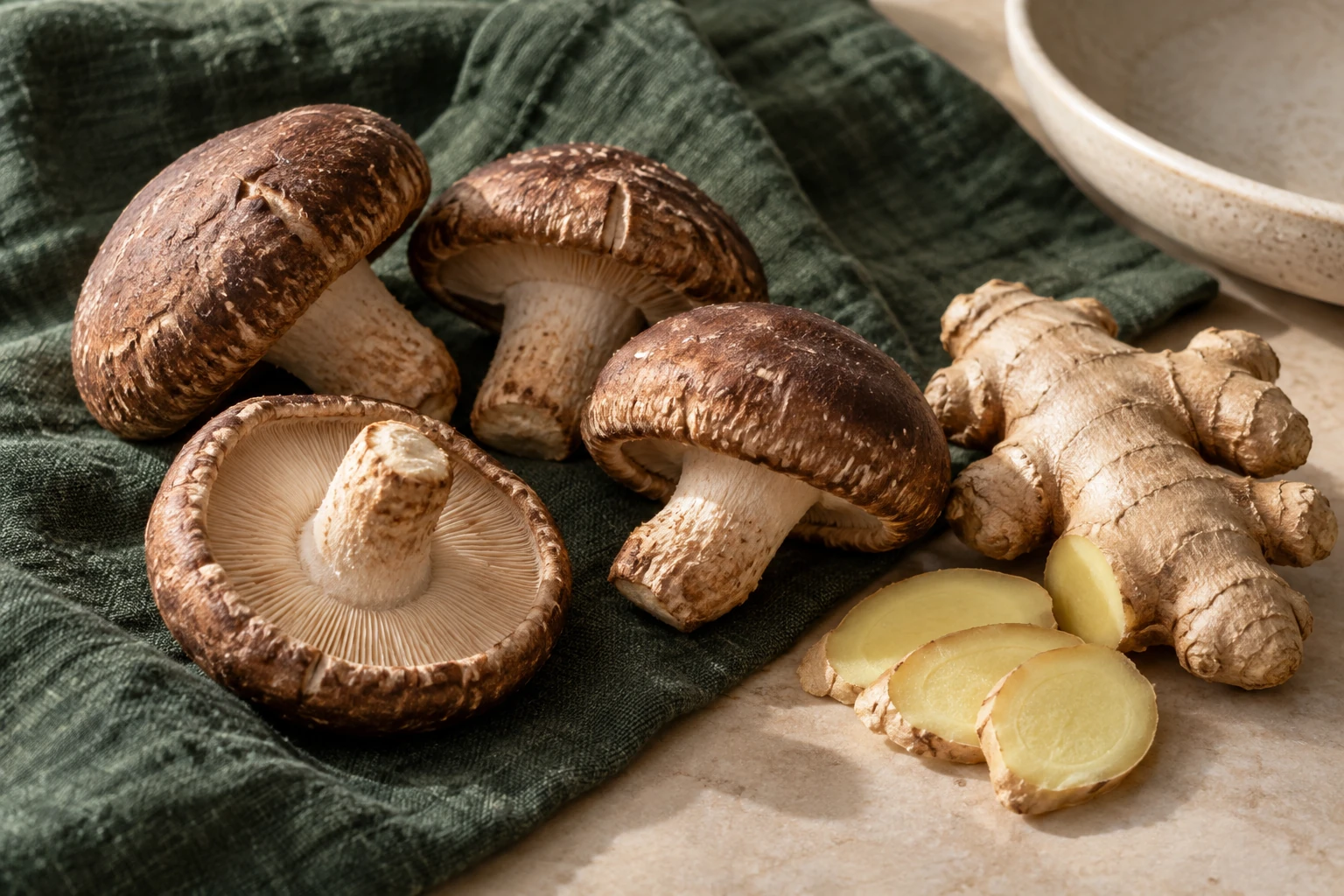
At THAM, the listed ingredients are minced pork, rice, chicken broth, shiitake mushrooms and ginger. That combination gives a helpful map of the bowl. The rice is its soft foundation. Minced pork distributes small bites through the soup, while mushrooms provide a contrasting chew. Chicken broth means the liquid has its own savoury character; the pork is not the only animal ingredient involved.
Ginger deserves particular attention. A fine piece can make one spoonful feel livelier than the next without turning the entire bowl into a chilli dish. Shiitake likewise changes the experience through texture as well as flavour. When deciding whether to add more mushrooms or more meat, think about which part of the bowl you would like to encounter more often. The two additions answer different appetites even though both make the soup more substantial.
How the bowl comes together
A general preparation sequence starts with developing and seasoning the liquid, cooking the pork thoroughly, and bringing the rice to the desired softness. Aromatic ingredients may flavour the broth or finish the bowl. The order depends on the rice: uncooked grains need time and sufficient liquid, while already cooked grains need a shorter journey through the pot. This describes the cooking logic, not THAM's kitchen recipe.
W. Tipsuwan cooks minced pork with aromatics before adding liquid and later adding cooked rice. Praew demonstrates a different route, cooking uncooked rice in the soup and adding pork meatballs. Each method controls the relationship between meat, grain and broth in its own way. Home cooks should follow one complete, reliable method rather than combining timings from several recipes. A short published cooking time for cooked rice cannot be transferred unchanged to raw rice.
Why the soup changes as you eat
Rice continues taking up liquid as it sits. Pailin's rice-soup method adds cooked rice near serving to preserve the intended balance. This explains a familiar dining experience: the first spoonful may be relatively brothy, while the last is fuller and softer. That change is not automatically a mistake, and it does not make the bowl jok simply because some broth has been absorbed.
For the clearest impression, begin eating while the soup is freshly served, once it is comfortable to taste. Give the bowl a gentle stir so you do not judge its density from the rice gathered at the bottom. If you prefer a generous amount of liquid, explain that preference when ordering. “More broth” communicates a specific texture more clearly than describing the whole dish as too heavy or too light.
Variations worth recognising
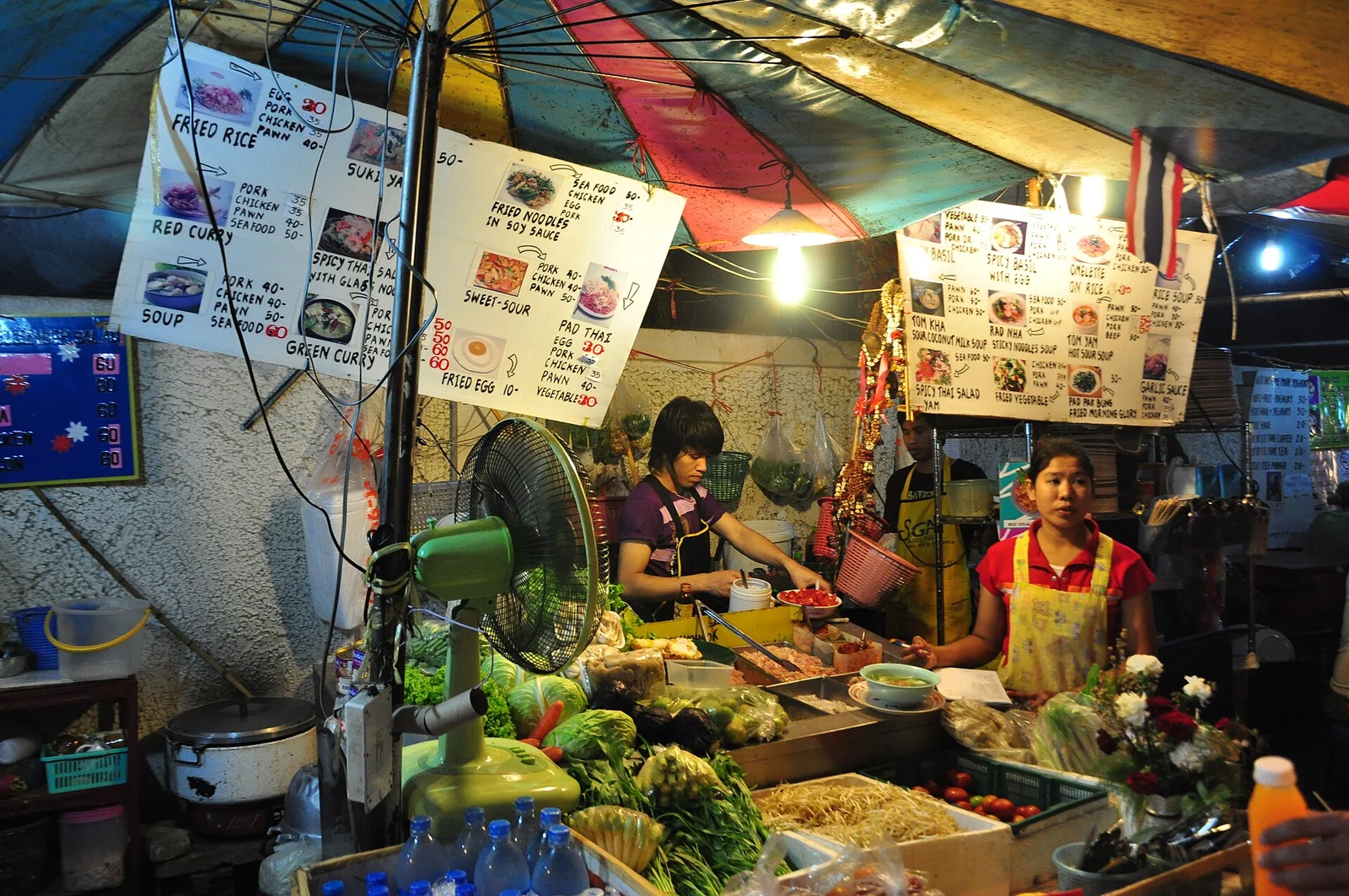
Pork is one possibility within a larger family of rice soups. The cooks referenced here also describe chicken, fish or prawn versions. The protein name therefore matters: the words khao tom alone do not promise pork. Minced meat dispersed through a bowl also eats differently from separate meatballs, even when the underlying flavour is similar.
Regional examples can broaden the picture further. The Tourism Authority of Thailand describes a Tak breakfast speciality, khao tom pong karee, with curry powder and crispy wonton. That is a documented local variation, not a reason to expect curry powder in every Thai rice soup. For travellers, these differences make the menu worth reading rather than treating every bowl as interchangeable. They also explain why a soup remembered from one trip may look different at the next restaurant.
Breakfast, lunch and the question of an egg
Breakfast is a familiar setting for rice soup and jok, but the texture need not dictate the clock. If a restaurant offers khao tom at the time you are eating, it can be the meal you want then. Consider your appetite rather than whether a warm bowl belongs beside coffee or after sightseeing. Broth, rice and pork already form a coherent dish without an extra plate of plain rice.
An egg changes that balance. Its softness can bring another texture into a bowl already rich in tender grains, while extra meatballs give more distinct bites. If you have a dietary restriction, ask about the broth as well as the visible topping. Removing pork from a bowl made with chicken broth would not make it vegetarian. Likewise, a short ingredient description is not a complete allergen statement; sauces and preparation details require their own conversation.
Ordering Khao Tom Pork at THAM
THAM's Khao Tom Pork costs 140 THB and contains minced pork, rice, chicken broth, shiitake mushrooms and ginger. Like all THAM dishes, it is non-spicy by default, with chilli available on request. You can add three pork meatballs for 39 THB, a poached egg for 15 THB, or extra mushrooms for 15 THB, measured as 50 g before cooking. The mushroom weight describes the portion basis, not mushrooms served raw.
Choose the standard bowl to discover its balance first, or use the additions to emphasise the texture you prefer. Meatballs make the pork more prominent, mushrooms add more contrasting bites, and the egg offers another soft element. The pleasure of khao tom is in these small decisions: a spoonful of broth, a little rice, a piece of ginger, then a different combination on the next spoon.
KEEP YOUR CURIOSITY HUNGRY
Explore THAM’s Khao Tom Pork, then choose an egg, mushrooms or pork meatballs to suit your appetite.
Explore the THAM menuRead further
Photography & credits
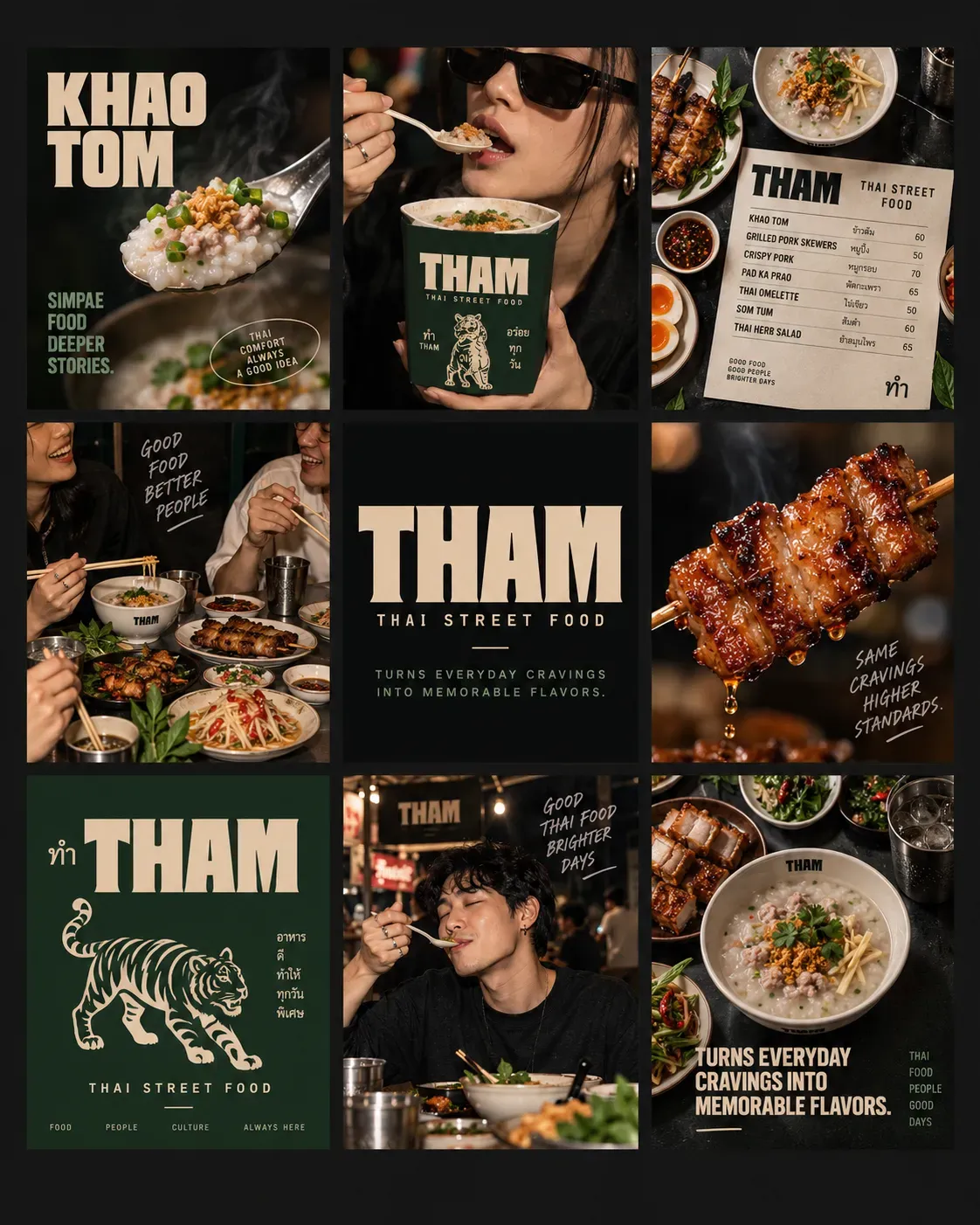
Editorial photographs illustrate Thai food and culture. THAM lifestyle images are creative brand imagery, including AI-generated scenes; they do not document the restaurant, its location or exact servings.
- Khao Tom Pork — THAM — AI-generated food illustration.
- Shiitake mushrooms and ginger — THAM — AI-generated food illustration.
- 2014 uncooked Thai jasmine rice.jpg — Takeaway. CC BY-SA 4.0. Resized and compressed for the web.
- Khao tom vendor — eric molina from New York City, United States. CC BY 2.0. Resized and compressed for the web.
- Khao tom kui plain rice congee — Takeaway. CC BY-SA 3.0. Resized and compressed for the web.