Say it: tom yum goong Approximate English sounds
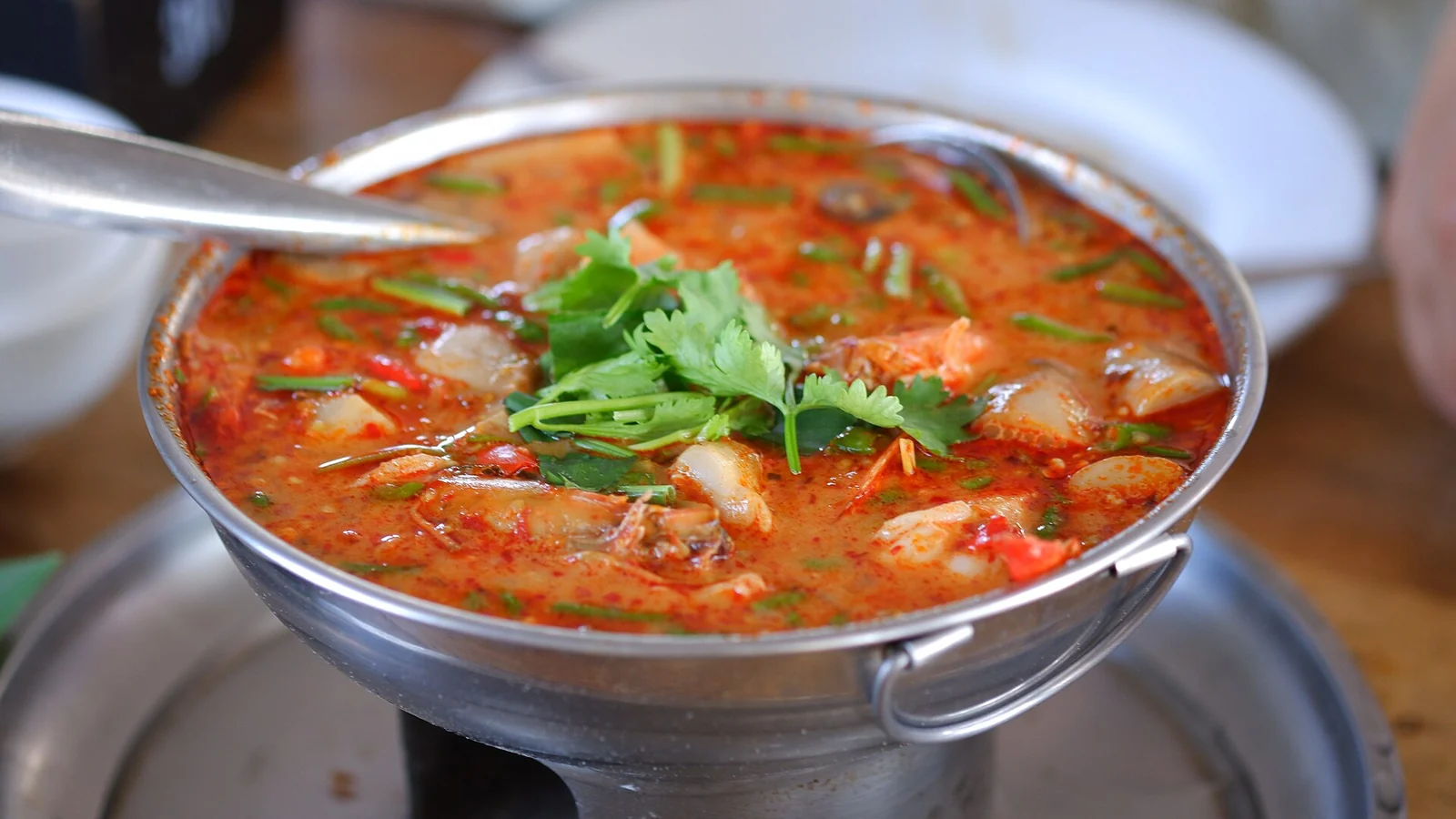
Tom Yum Goong is a soup you can begin exploring before the first spoonful. The aroma rises from herbs in the broth; the prawns and mushrooms promise very different textures; a taste brings the decisive sourness of lime. Its reputation for intensity is deserved, but intensity need not mean chilli alone. Understanding the separate jobs of its ingredients makes the dish much easier to appreciate, whether you prefer clear broth or a creamier version, a shared bowl with rice or a soup ordered for yourself.
What the name tells you
The Thai name is ต้มยำกุ้ง, commonly written Tom Yum Goong, Tom Yam Kung or Tomyum Kung. “Goong” or “kung” identifies prawns or shrimp. Thailand Foundation explains the first two elements through boiling and the assertively seasoned character associated with yam-style dishes. English menus usually condense that idea to hot-and-sour prawn soup.
The useful ordering lesson is that tom yum names a wider soup family, while goong identifies the seafood in this version. A chicken or mushroom tom yum may share an aromatic approach, but it is not automatically the same preparation with one item removed. Say “tom yum goong”, giving “goong” a long vowel similar to “moon”. A menu photograph may help identify the bowl, but the written name is better evidence of the intended protein.
A history connected to riverside communities
UNESCO's account connects Tomyum Kung with Buddhist riverside communities in Thailand's Central Plains and the availability of freshwater prawns and local herbs. It describes knowledge passed through families, gatherings and, increasingly, restaurants and education. This is a story about cooking skills and a relationship with ingredients, rather than a single celebrated chef inventing a finished modern recipe.
Thailand Foundation also discusses early written versions while acknowledging changes between historical soups and the familiar contemporary bowl. A recipe appearing in print establishes that a version was recorded; it does not establish the first time anyone cooked it. Without that distinction, food history becomes too neat. Today, bowls may use different prawns, seasonings and degrees of richness. Those differences invite a closer look at the cook's choices without requiring a claim that every detail has remained unchanged for centuries.
What UNESCO recognised in 2024
Tomyum Kung was inscribed in 2024 on UNESCO's Representative List of the Intangible Cultural Heritage of Humanity. The recognition concerns a living cultural practice. It is not a restaurant rating, a certification of one commercial recipe or a World Heritage Site designation. A restaurant serving tom yum does not thereby become UNESCO certified.
For a diner, the interesting implication is that looking beyond the finished photograph matters. The selection of ingredients, judgement during seasoning and sharing of knowledge belong to the story too. You do not need a ceremonial setting to take an everyday soup seriously. Notice the aromas and ask an informed question about the version being served. That is a more useful way to engage with its cultural significance than looking for an official seal on the menu.
A soup can smell citrusy before it tastes sour.

The aromatic ingredients and their different jobs
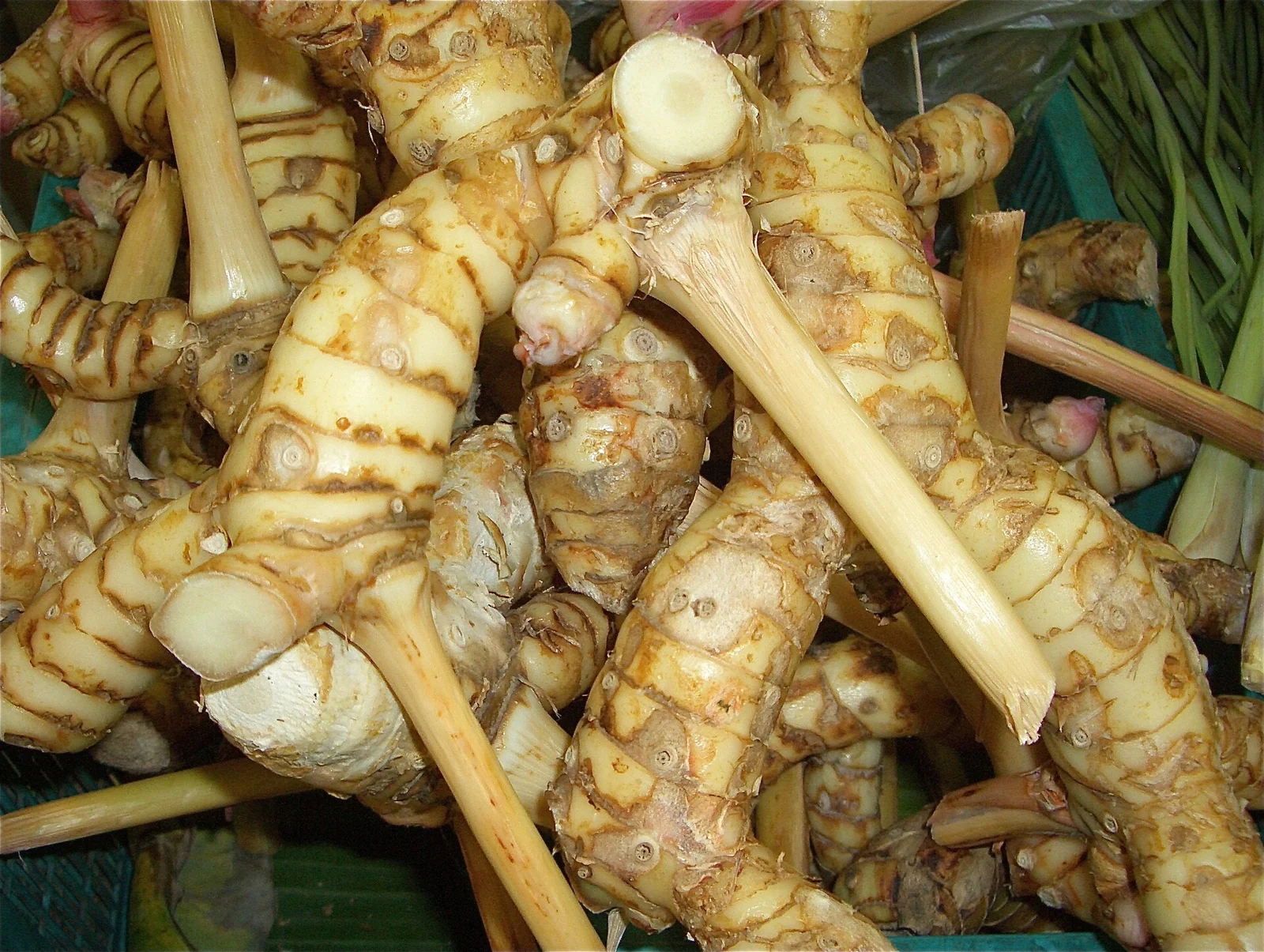
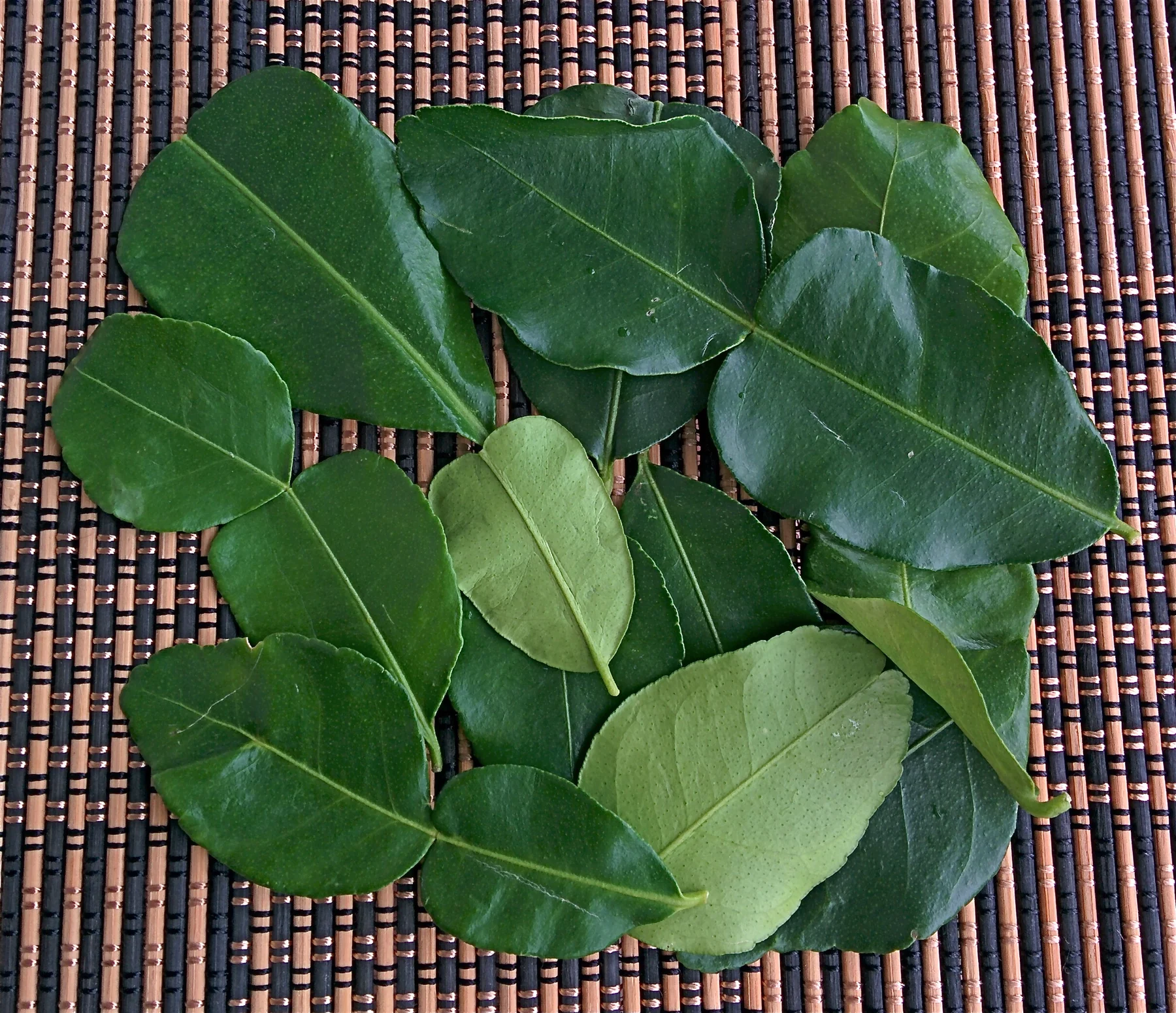
Lemongrass, galangal and makrut lime leaves are characteristic aromatics in the primary recipes consulted. They perfume the liquid, while lime juice supplies the pronounced acidity. That distinction is central: a soup can smell citrusy before it tastes sour. Galangal should not simply disappear into the vague description “ginger”; it is a separate ingredient with its own character.
Prawns give the bowl both its identity and a substantial bite. Mushrooms offer a softer, yielding contrast. In W. Tipsuwan's prawn-soup recipe, straw mushrooms sit alongside river prawns, while fish sauce seasons the broth and roasted chilli paste contributes another layer. These details illustrate one cook's version. They are not a complete declaration of THAM's ingredients. When tasting, try liquid first, then a mushroom, then prawn with broth: the same seasoning feels different against each texture.
Clear and creamy tom yum explained
Nam sai refers to the clear style; nam khon describes a richer, cloudy or creamy style. The choice is about the character of the broth, not a reliable scale of chilli heat. A clear soup can be forceful, and a creamy one can still be sharply sour. Colour alone is an unreliable guide to either mildness or ingredients.
Pailin Chongchitnant's creamy version uses unsweetened evaporated milk, with coconut milk offered as an alternative. Creamy tom yum therefore does not automatically mean coconut soup. Nor does evaporated milk mean sweetened condensed milk, which is a different product. Ask what provides the richness if that matters to your preference or diet. Comparing the two styles can be enjoyable, but there is no need to declare one the proper bowl for every diner: each changes how the aromatic broth is experienced.
How cooks build the soup
The broad sequence is to prepare a flavourful liquid, infuse the robust aromatics, cook mushrooms and prawns, and adjust the seasoning. Some cooks extract flavour from prawn heads and shells; others work with a prepared stock. Prawns need careful timing because prolonged cooking changes their texture. The soup is not improved simply by boiling every ingredient for as long as possible.
In Pailin's creamy method, lime is stirred in once active bubbling has stopped, helping limit curdling. W. Tipsuwan demonstrates a different sequence, showing that there is more than one published approach. These examples explain the decisions behind the dish; they are not THAM's exact kitchen process. If you want to recreate a bowl at home, select a complete recipe that matches the broth style you want. Mixing the ingredient list from one version with the method from another can obscure what either cook intended.
Which pieces should you eat?
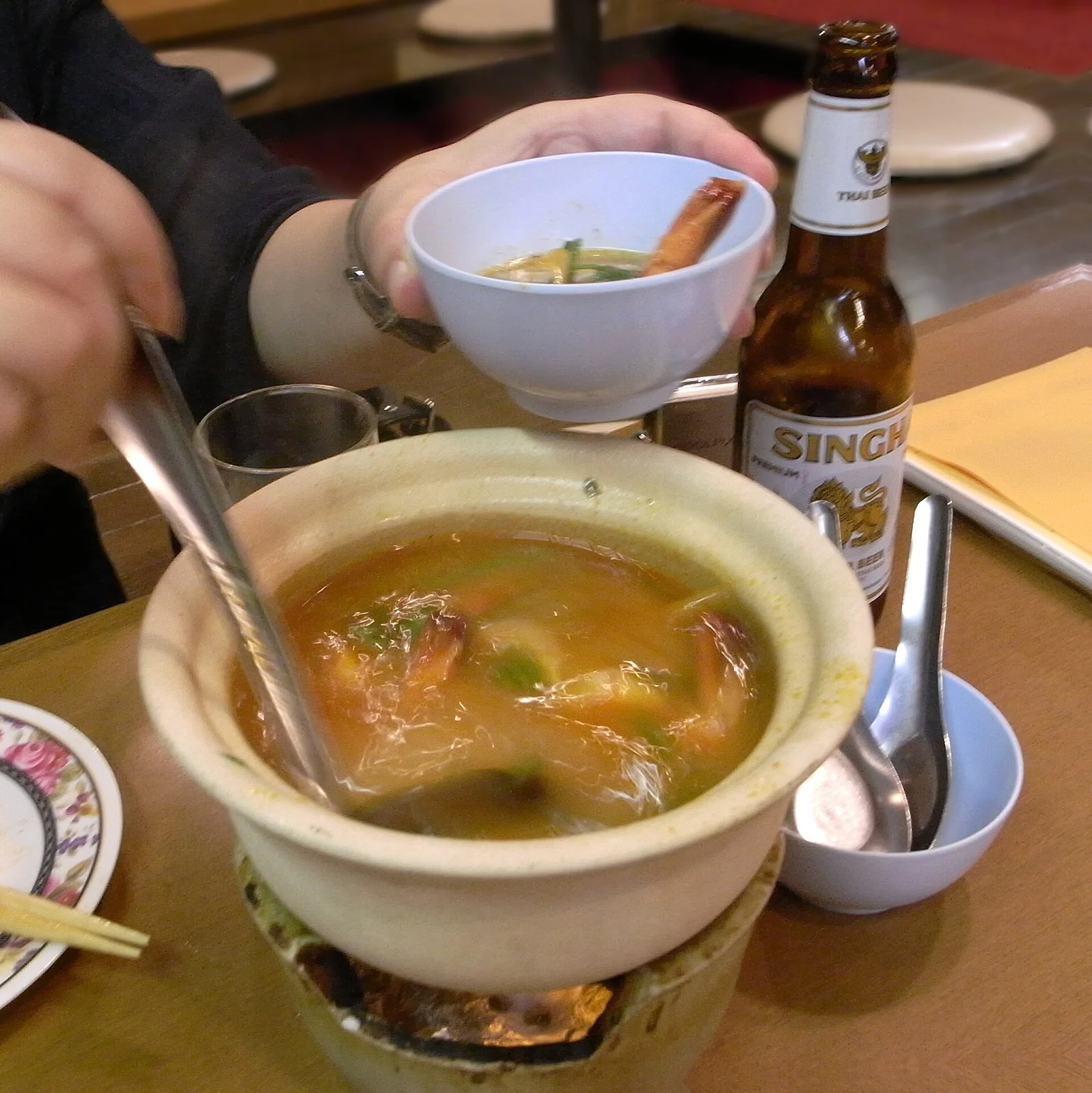
Large lemongrass sections, galangal slices and makrut leaves may remain in the bowl after flavouring it. They are generally left uneaten in these soup preparations. A tough piece that resists your spoon is not a challenge you have failed; it may have already performed its job in the broth. Finely chopped finishing herbs are a different matter.
Move larger aromatic pieces aside as you encounter them so you can enjoy the prawns, mushrooms and liquid comfortably. If a prawn arrives with shell or head attached, deal with it separately rather than trying to fit the whole thing into a spoonful. Presentation varies, so the easiest question is whether the prawns are peeled. You can appreciate a soup's aroma without consuming every solid object visible in it, just as you would leave a bay leaf in another kind of broth.
Rice, sharing and choosing the right balance
Rice makes sense alongside a strongly seasoned soup because it gives you control over each mouthful. Try soup separately, then a little with rice, and decide which proportion you enjoy. If sharing, use the serving utensil provided to portion broth and solids into your own bowl. A communal soup is easier to divide fairly when prawns and mushrooms are considered alongside the liquid.
Before ordering, settle three practical points: whether rice is included, whether you want chilli, and whether the soup is intended for one person or sharing. Those answers are more useful than guessing from the word “soup”, which can suggest a starter to some diners and a main component of a meal to others. If considering an extra portion of prawns, think about how many people want a substantial seafood bite. Extra rice changes the meal differently, giving more accompaniment rather than more soup.
Tom Yum Goong at THAM
THAM's Tom Yum Goong costs 170 THB and lists prawns, lemongrass, galangal, straw mushrooms and lime. Rice is not included. All THAM dishes are non-spicy by default; ask for chilli if you want it. The menu brief identifies it as Nam Khon, the creamy style. Ask the team about the ingredients providing that richness if you have a dietary requirement.
You can add four prawns for 45 THB, extra mushrooms for 15 THB using a 50 g pre-cooking portion, or 150 g of cooked rice for 15 THB. The mushroom measurement does not mean they are served raw. Order the additions around the meal you want: more seafood, more mushroom texture, or rice beside the aromatic broth. Begin with a spoonful before making further adjustments, allowing the lime, herbs and prawn flavour to introduce themselves together.
KEEP YOUR CURIOSITY HUNGRY
Order THAM’s Tom Yum Goong with optional extra prawns, mushrooms or rice, and request chilli to suit your preference.
Explore the THAM menuRead further
Photography & credits
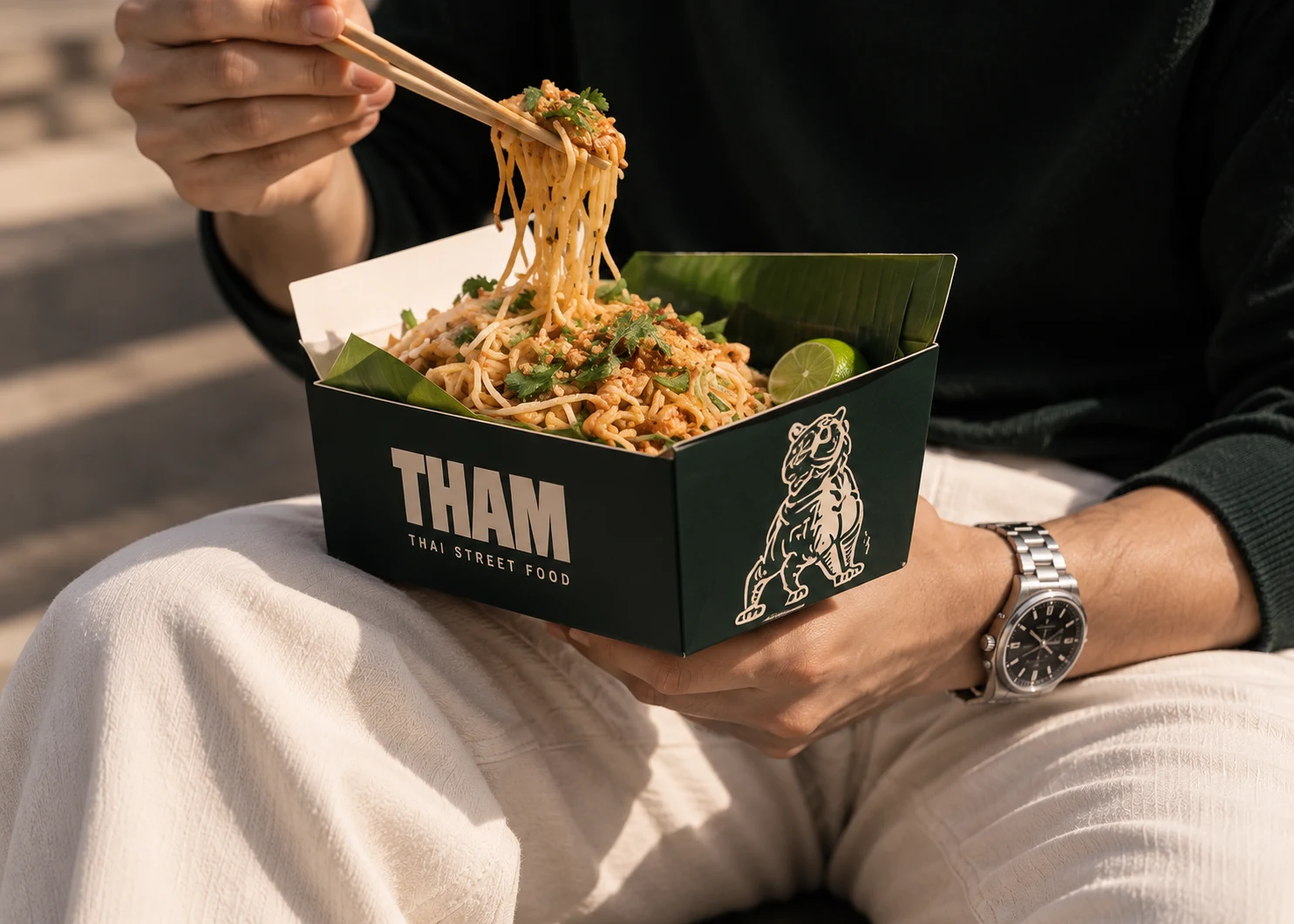
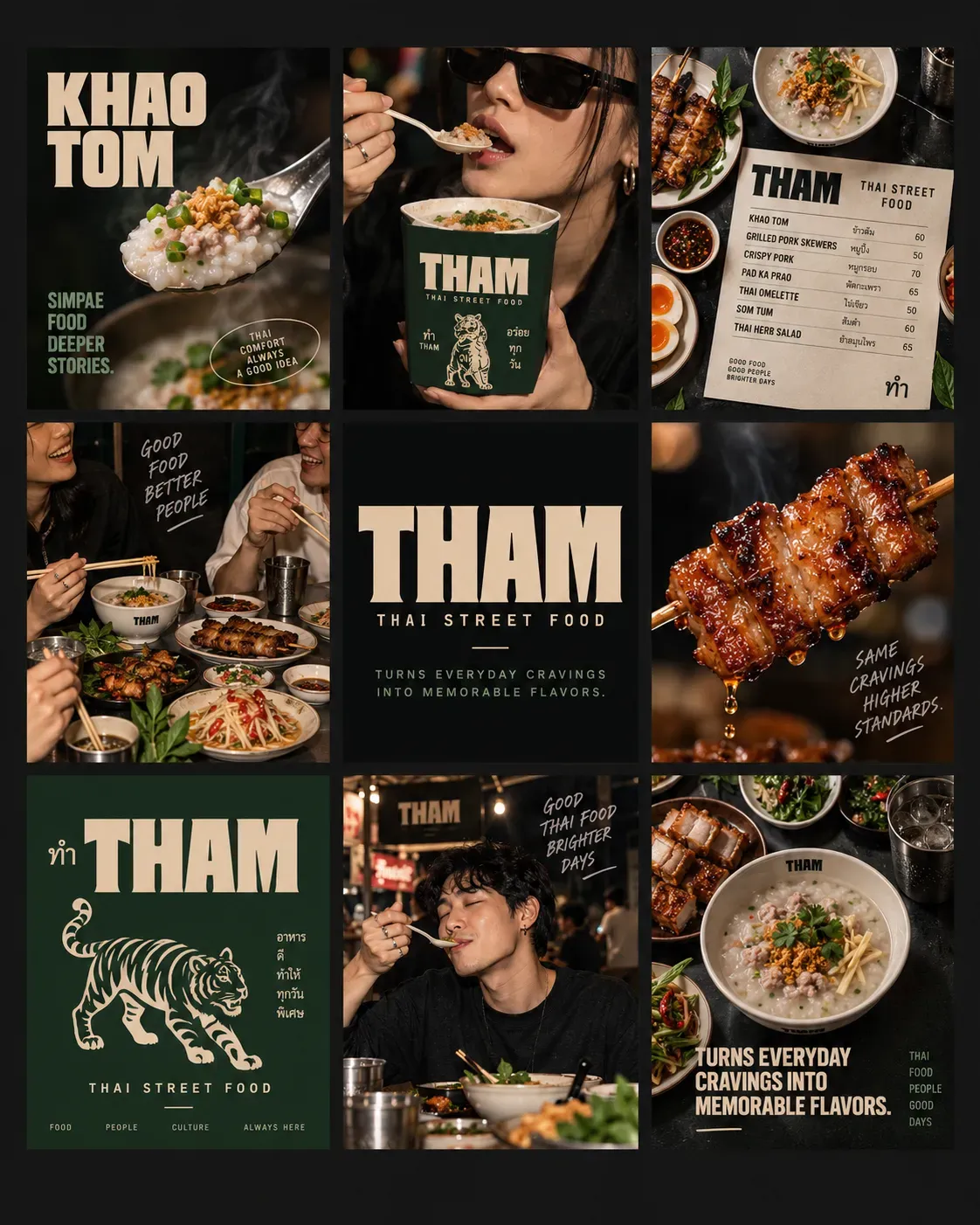
Editorial photographs illustrate Thai food and culture. THAM lifestyle images are creative brand imagery, including AI-generated scenes; they do not document the restaurant, its location or exact servings.
- Tom yum goong prawn soup — Vee Satayamas. CC BY 2.0. Resized and compressed for the web.
- Fresh greater galangal rhizome — Susan Slater. CC BY-SA 4.0. Resized and compressed for the web.
- Fresh lemongrass leaves — Obsidian Soul. CC BY-SA 3.0. Resized and compressed for the web.
- 57 - IMG 20180611 112300.jpg — Susan Slater. CC BY-SA 4.0. Resized and compressed for the web.
- Tom yum goong in a hot pot — kisocci. CC BY-SA 2.0. Resized and compressed for the web.